


 Request a Quote
- Overview
- Olink Reveal vs. Explore
- Bridging Olink Explore and Target
- Olink Reveal Panel vs Other Panels
- Workflow
- Why Creative Proteomics
- Demo
- Sample Requirements
- FAQ
Why Choose Olink Reveal?
The core value proposition of Olink Reveal is its ability to deliver high-quality, large-scale proteomic data with unprecedented ease and speed. It is engineered for researchers who need robust, scalable discovery data without the traditional overhead.
Olink Reveal is ideally suited for NGS labs looking to enter the proteomics space without capital investment in new, specialized instrumentation. It is the perfect tool for hypothesis-generation studies, pilot projects, and focused discovery cohorts where the goal is to identify a robust signal from a thousand-protein panel before scaling up.
Key Advantages
- Broad, Actionable Coverage: With over 1,000 proteins measured simultaneously, Reveal provides a comprehensive view of the proteome, sufficient to identify key biological pathways and strong candidate biomarkers without being overwhelming. This breadth strikes a perfect balance between discovery power and focused analysis.
- Exceptionally Low Hands-On Time: A standout feature of Reveal is its streamlined workflow, requiring only 2.5 hours of hands-on time per kit. This efficiency minimizes labor, reduces the potential for human error, and makes it feasible for labs without dedicated automation to perform high-plex proteomics.
- Minimal Sample Consumption: Reveal requires just 4 μL of sample (plasma or serum), making it ideal for studies with precious or limited sample volumes, such as pediatric cohorts or longitudinal biobanks.
- Rapid Turnaround for Library Preparation: The process from samples to sequencing-ready libraries is remarkably fast, with library preparation completed in just 1.5 days. This accelerates the timeline from experiment to data analysis.
- NGS Readout for Scalability: By leveraging next-generation sequencing as its detection method, Reveal inherits the scalability and wide dynamic range of NGS technology. A single sequencing run can accommodate data for 86 samples per 1 billion reads, allowing for efficient processing of small to medium-sized cohorts.
Reveal: A Comparison with Explore HT and 3072
To fully appreciate Reveal, it's essential to understand its relationship with its "siblings" in the Olink Explore family. The choice between Reveal, Explore HT, and Explore 3072/384 is not about which is better, but about which is the right tool for the specific stage of your research journey.
- Olink Reveal: The Directional Discovery Tool
Reveal is your first step. Its >1,000-protein panel is designed for "directional discovery", which efficiently pinpoints the most promising protein signatures and biological pathways from a vast landscape. It answers the question, "Where should I look?" with high confidence and lower initial investment. Once compelling evidence is gathered from a Reveal study, you can proceed with confidence to a deeper, more comprehensive analysis.
- Olink Explore HT / 3072: The Deep-Dive and Large-Cohort Tools
The Olink Explore platforms are designed for maximum proteome coverage and ultra-high throughput.
Explore HT offers an unparalleled ~5,400 protein panels, providing the deepest possible unbiased view of the proteome. It is engineered for automation, capable of processing 2,000+ samples per week, and is incredibly sample-efficient, requiring only 2 μL. However, its strength in ultra-high-throughput comes with a higher barrier to entry, often requiring automated liquid handling systems.
Explore 3072/384 provides a middle ground with ~2,900 proteins, also using an NGS readout. It is highly flexible, with sample volume requirements ranging from 1 to 6 μL.
How Reveal Connects to Targeted qPCR Panels
A complete research pipeline doesn't end with discovery; it must flow seamlessly into validation and implementation. This is where the synergy between Olink's NGS-based discovery platforms (Reveal/Explore) and its targeted, qPCR-based platforms (Target/Flex/Focus) becomes a powerful strategic advantage.
- Reveal/Explore = Discovery Stage
These platforms are used for unbiased, hypothesis-generating research. They utilize Relative Quantification (NPX - Normalized Protein eXpression) values, which are ideal for comparing relative protein levels across large sample sets to find significant differences.
- Target/Flex/Focus = Validation/Implementation Stage
Once key candidate proteins are identified from a Reveal study, these smaller, targeted panels are used to validate the findings in larger, independent cohorts.
- Quantification Method: Relative (NPX) vs. Absolute (pg/mL)
Reveal uses NPX, a robust relative quantification unit that is perfect for discovery. Target/Flex/Focus panels support absolute quantification in pg/mL. This is critical for applications requiring predefined thresholds, such as diagnostic assays, or for ensuring consistency across multiple testing sites in a multi-center study.
The Seamless Workflow
1. Discover with Reveal: Run your pilot cohort with the Reveal 1,000+ panel. Identify a shortlist of 20-200 candidate proteins strongly associated with your disease or phenotype of interest.
2. Validate with Target 96 or Flex: Take your candidate list and leverage Olink's pre-configured Target 96 panels (focused on specific biology) or use the Flex platform to create a custom panel of up to 200 proteins from a pre-validated library of ~200 assays. Flex is ideal for this validation step as it also supports absolute quantification.
3. Implement with Focus or Signature Q100: For the final implementation phase, you can use the Focus platform to create a highly customized, small panel (≤21 proteins) or utilize the Signature Q100 solution, which is optimized for robust, quantitative assays ready for clinical translation.
This integrated ecosystem ensures that the biomarkers you discover with Reveal can be efficiently and reliably transitioned into validated, actionable assays.
Olink Reveal Panel vs Other Panels: High-Throughput Discovery with NGS Technology
| Panel/Platform | Proteins Covered (plex) | Readout | Sample Volume per Test | Typical Throughput / Format | Quantification Type | Ideal Use Case | Notes |
| Reveal | >1,000 | NGS (NovaSeq/NextSeq, etc.) | 4 μL | 96 reactions (86 samples + 10 controls); 1.5 days library prep, 2.5h pre-run operation | NPX relative quantification (default) | Medium-scale high-throughput discovery; immune/inflammation-focused coverage; enables labs familiar with NGS to quickly adopt proteomics | Reference reagent cost ~$98/sample |
| Explore HT | High-plex | NGS (automated) | 2 μL | >2,000 samples/week per line; 10-log dynamic range | NPX relative quantification | Maximum coverage/unbiased discovery in large cohorts (e.g., population studies like UK Biobank) | Flagship discovery platform scalable from hundreds to millions of samples. |
| Explore 3072/384 | Module-based | NGS module | 1–6 μL | 88 samples/kit | NPX relative quantification | Focused high-plex discovery (oncology/inflammation/neurology/cardio-metabolic modules) | Modular design balancing breadth and interpretability. |
| Target 96 | 96-plex | qPCR (Signature Q100) | 1 μL | 88 samples/panel | NPX relative quantification | Hypothesis-driven validation; cost-effective medium throughput | Widely published; broad matrix compatibility. |
| Target 48 | 48-plex | qPCR (Signature Q100) | ~1–2 μL | 40 samples/kit; readout in pg/mL or relative units | Relative or absolute quantification | Immune/cytokine monitoring, pharmacodynamics follow-up | Two kits combined can measure ~89 proteins. |
| Flex (Semi-Custom) | Custom from library | qPCR (Signature Q100) | 1 μL | Kit-dependent | Absolute quantification (pg/mL) or NPX | Longitudinal follow-up/pharmacodynamics/budget-friendly validation; rapid panel assembly from library | Standardized workflow with free combination from protein library. |
| Focus (Custom) | Fully custom | qPCR (Signature Q100) | 1 μL | Project-dependent | NPX or absolute quantification (choose one) | Productizing discovery findings for multi-center validation/translation | Olink provides methodological design and validation support. |
Note: The Signature Q100 serves as a shared detection platform for the Target, Flex, and Focus series; the qPCR series typically requires only 1 µL per sample, making it suitable for precious samples.
Workflow of Olink Reveal Service
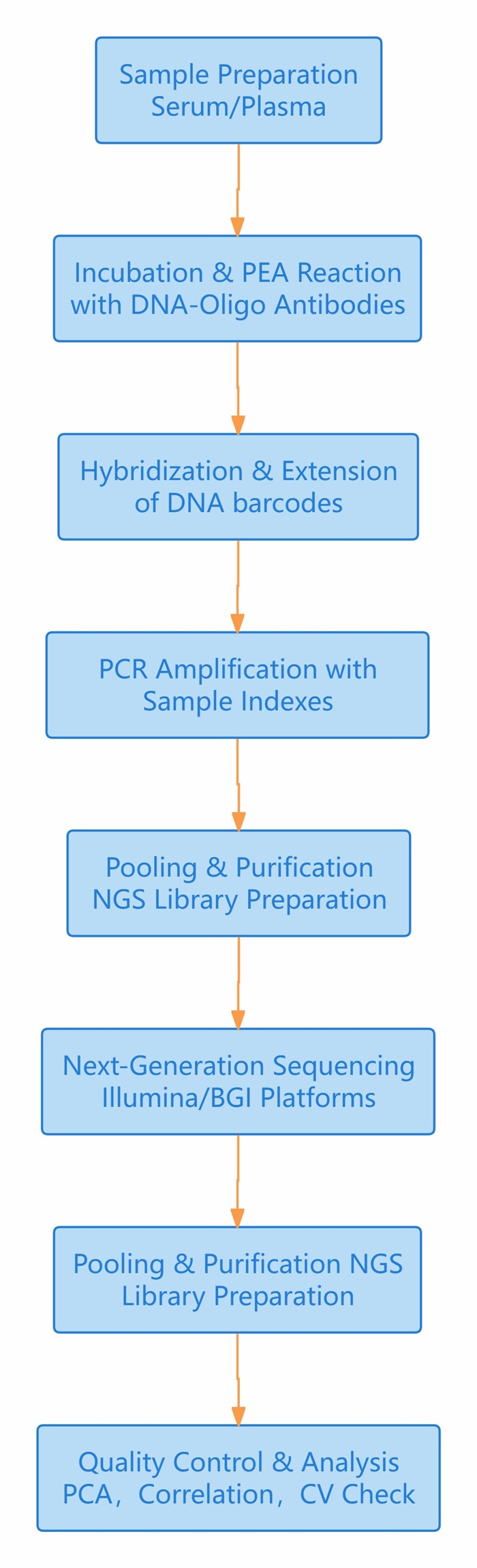 Figure 1: Workflow of Olink Reveal Service.
Why Creative Proteomics

Advanced Technology and High Performance
We utilize Olink's proprietary Proximity Extension Assay (PEA) technology combined with Next-Generation Sequencing (NGS). This integration enables high-sensitivity detection (with a lower detection limit of ~30 fg/mL) and a wide dynamic range (covering 10 orders of magnitude) using minimal sample volume (1–6 μL of serum/plasma).

Comprehensive Protein Panel with Broad Biological Relevance
The Olink Reveal panel targets approximately 1,000 carefully curated human proteins, with a strong emphasis on immunology and inflammation research. The panel's content is biologically relevant, covering 100% of top-level biological pathways and 64% of Reactome pathways, making it particularly suitable for in-depth investigation of inflammation biology and disease mechanisms.

Expertise in Multi-omics and Professional Support
We bring extensive expertise in multi-omics (genomics, transcriptomics, and proteomics) to your project. Our professional support covers the entire workflow, from experimental design and sample processing to data analysis. Our proven track record guarantees reliable results for your large-scale studies.
Demo Results of Olink Data
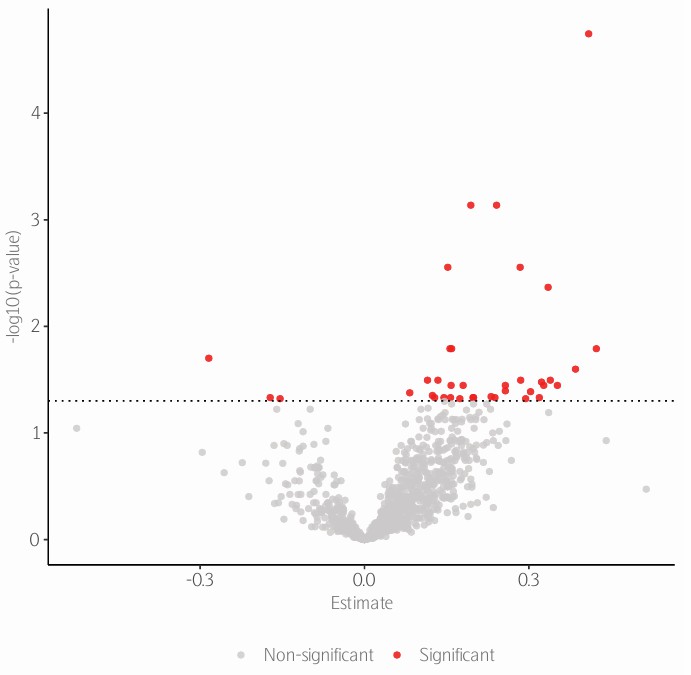 Figure 2: 37 proteins significantly associated with HbA1c levels. (Karol, K., et al. 2025)
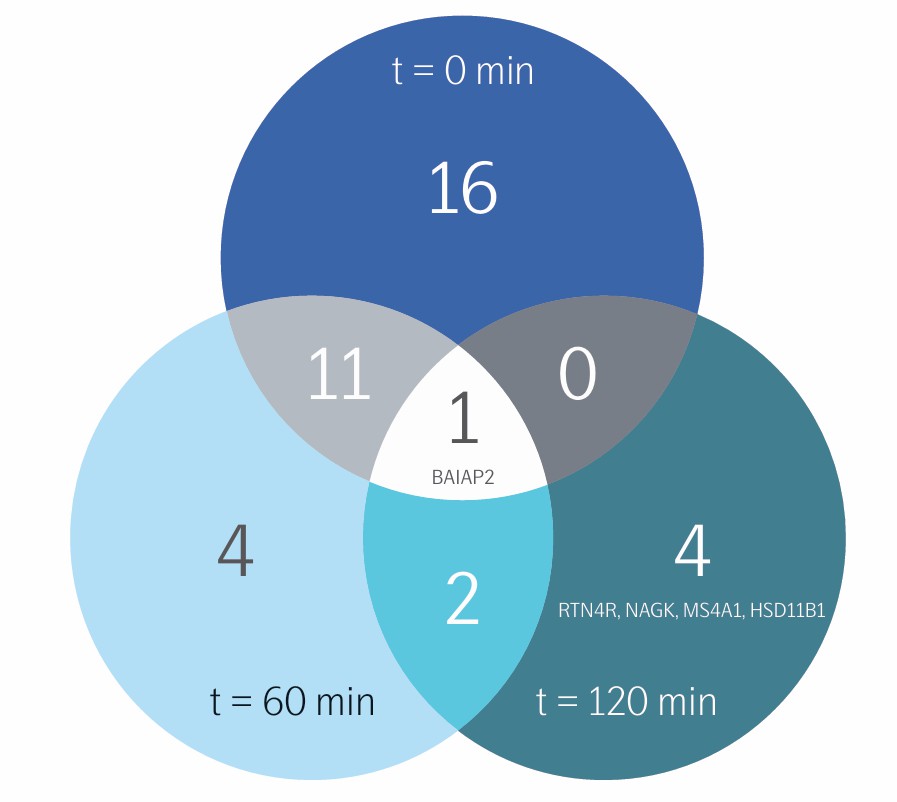 Figure 3: Number of proteins associated with OGTT time points. (Karol, K., et al. 2025)
Sample Requirements for Olink Reveal Panel
1. Sample Types and Volumes
- Standard: Serum, Plasma, Cerebrospinal Fluid (CSF).
- Other: Urine, Tissue/Cell Lysates, Cell Culture Supernatant, Saliva, Sputum, BALF, etc.
- Recommended Sample Volume is 4 μL of serum or plasma. A minimal volume of 1-6 μL is generally required, depending on the sample type.
2. Sample Preparation and Quality Control
Rigorous quality control is integral to the Olink Reveal workflow. The process utilizes both internal and external controls to ensure data reliability.
- Internal Controls: Each sample includes multiple internal controls to monitor the key steps of the assay (incubation, extension, and amplification). Significant deviations in these controls can lead to a sample or plate being flagged.
- External Controls: Each processing plate includes external controls, such as negative controls (to determine the limit of detection) and sample controls (to assess inter-plate and intra-plate coefficients of variation). This ensures consistency across different batches and runs.
FAQs
What kind of data output and analysis can I expect?
The primary data output is a protein expression matrix in Normalized Protein eXpression (NPX) values. We often provide basic bioinformatics analysis, which may comprise quality control, statistical analyses (e.g., T-test, ANOVA), and visualization (e.g., volcano plots), as well as functional analysis like GO and KEGG pathway enrichment.
Can Olink Reveal data be integrated with data from other Olink panels?
Yes, Olink provides official bridging protocols and bioinformatics tools (e.g., in the OlinkAnalyze R package) to normalize and combine datasets from different Olink products, such as Olink Explore 3072 and Olink Reveal. This requires a set of overlapping "bridging samples" measured on both platforms.
What are the typical applications of Olink Reveal?
Olink Reveal is particularly suited for clinical and translational research in the following areas:
- Biomarker Discovery: Identifying protein biomarkers for disease prediction, diagnosis, and prognosis.
- Protein Signature-Based Cohort Stratification: Classifying subject cohorts into distinct sub-groups based on their unique proteomic profiles to guide precision health strategies.
- Longitudinal Proteomic Dynamics Monitoring: Assessing serial changes in protein expression to evaluate biological responses to an intervention and inform management strategies.
- Drug Development: Aiding in target identification and biomarker validation.
- Multi-omics Integration: Combining proteomic data with genomic and transcriptomic data for comprehensive biological insights.
Reference
- Olink®. (2025). Identification of potential biomarkers of prediabetes and diabetes using Olink Reveal [Case study]. Retrieved October 23, 2025, from https://olink.com/products/olink-reveal.