


 Request a Quote
- Overview
- Applications
- Workflow
- Why Creative Proteomics
- Demo
- Sample Requirements
- FAQ
Olink Focus vs. Flex: Which Solution Fits Your Research Needs?
The transition from high-throughput biomarker discovery to targeted validation is a critical juncture in translational research. Identifying promising candidates amidst vast proteomic datasets is only the first step; confidently verifying their biological relevance in specific contexts requires focused, robust, and reliable assays.
This is where Olink Proteomics' targeted solutions shine, particularly their customized offerings: Olink Focus and Olink Flex. While both cater to the need for validating smaller protein panels (≤21 analytes), they represent distinct approaches tailored to different research needs and project complexities.
Olink Focus: Bespoke, Collaborative Validation
Olink Focus represents the "bespoke" end of Olink's customization spectrum. It's a collaborative, project-based service designed for situations requiring deeper tailoring beyond the constraints of a predefined library or necessitating absolute quantification.
- Customization Depth (High): Focus offers true co-development. Researchers work directly with our scientific team to define a panel of approximately 15-21 proteins. Crucially, this panel can include proteins not currently in Olink's standard catalog or the Flex Library.
- Source Library: Proteins can be sourced from anywhere, including novel targets or proteins requiring new assay development. This opens the door to validating truly unique signatures or specific pathways not covered by standard offerings.
- Validation Process (Comprehensive & Tailored): Focus involves a dedicated, project-specific method development and validation phase. The validation protocol is tailored to the specific panel, the sample matrix (e.g., serum, plasma, CSF, tissue homogenate), and the intended use context. This rigorous process ensures the panel meets stringent performance criteria (specificity, sensitivity, precision, reproducibility, stability) for your specific application.
- Quantification: Focus offers a critical choice—standard relative quantification (NPX) or absolute quantification. Absolute quantification provides concentration values in mass or molar units (e.g., pg/mL, nM), which are often required for assay bridging or comparisons across different platforms/studies. Achieving this typically involves a more complex calibration curve approach integrated into the validation.
- Delivery & Workflow: Focus is inherently a collaborative project. It begins with a consultation to define requirements. This is followed by the development/validation phase, which takes time and investment. Once validated, the custom panel is locked down, and samples are processed using PEA technology, read out via qPCR on the Signature Q100 instrument.
Flex vs. Focus: A Comparative Summary
| Feature | Olink Flex | Olink Focus |
| Customization Type | Semi-Custom (Configure from Library) | Full Custom (Co-Development) |
| Protein Source | Predefined Flex Library Only | Any Protein (New Assay Dev. Possible) |
| Customization Depth | Limited (Selection within Library) | High (Tailored Assay Dev & Validation) |
| Validation Approach | Standardized (Pre-validated Assays) | Project-Specific, Rigorous Validation |
| Quantification | Relative (NPX) Only | Choice: Relative (NPX) or Absolute |
| Researcher Input | Self-Service (Panel Builder Tool) | Collaborative (Scientific Consultation) |
| Development Time | Shorter (Leverages existing assays) | Longer (Includes assay dev/validation) |
| Relative Cost | Lower | Higher |
| Best Suited For | Rapid validation of known targets (within library); Monitoring; Budget-sensitive projects | Novel target validation; Absolute quantification; Rigorous validation for specific contexts; Diagnostic development; Regulatory needs |
Note: A crucial point of alignment between Flex and Focus is the readout technology. Both services utilize Olink's PEA technology combined with qPCR detection on the Signature Q100 instrument.
Applications of the Customized Olink Focus Platform
- Targeted Protein Signature Verification and Implementation
Our Customized Olink Focus platform is specifically designed for the precise verification and implementation of defined protein signatures. After initial, large-scale protein discovery phases, researchers often identify a smaller set of proteins strongly associated with a biological process. This targeted approach enables researchers to concentrate resources on validating the most promising candidates in larger studies with high specificity and sensitivity.
- High-Precision Analysis for Refined Biological Inquiry
Our Customized Olink Focus Service provides a high-specificity readout in pg/mL or NPX (Normalized Protein eXpression) relative units. This high level of precision is crucial when researchers need to confidently detect subtle changes in protein levels. The low sample volume requirement (1 µL) is particularly beneficial for longitudinal studies or when working with precious or limited sample sets, allowing for multiple analyses from a single collection.
- Integration into Multi-Stage Research Workflows
Olink Focus serves as a pivotal bridge in a scalable research workflow, enabling a smooth transition from large-scale protein discovery to targeted validation. Researchers can start by using a high-multiplex tool like Olink Explore HT to measure thousands of proteins and identify patterns across large sample sets. Once a refined list of candidate proteins is established, a custom Olink Focus panel allows focused, cost-effective validation in subsequent studies or larger cohorts.
- Focused Investigation of Specific Biological Processes
The platform enables deep exploration of particular biological pathways or states through custom panel design. Researchers can select up to 21 analytes from an extensive library to create a panel tailored to a specific biological area of interest. This allows for a concentrated investigation into the dynamics of a defined set of proteins, such as those involved in a particular cellular pathway or response mechanism.
Workflow of Customized Olink Focus Service
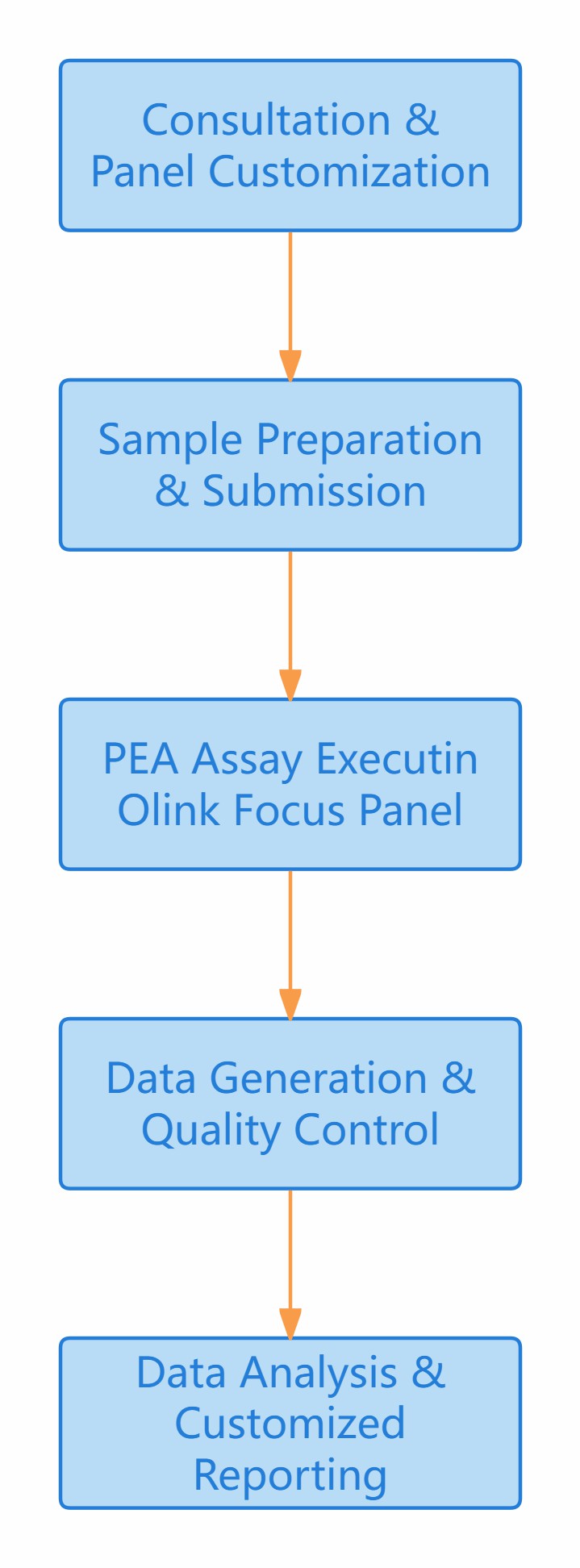 Figure 1: Workflow of Customized Olink Focus Service.
Why Creative Proteomics

Highly Flexible and Customizable Panel Design
Our Olink Focus service allows researchers to create a custom panel by selecting up to 21 protein biomarkers tailored to their specific research needs. This selection is made from a large library of over 5,400 pre-validated protein assays.

High Specificity and Sensitivity via PEA Technology
Our service is based on Olink's proprietary Proximity Extension Assay (PEA) technology. This method uses matched antibody pairs labeled with unique DNA oligonucleotides. A signal is only generated when both antibodies bind to the target protein, leading to DNA hybridization and amplification. This dual recognition ensures high specificity by avoiding cross-reactivity and provides a high dynamic range, enabling detection of proteins from very low (fg/mL) to high (mg/mL) abundance levels.

Low Sample Volume Requirement
The Olink Focus assay requires only a very small sample volume of 1 µL to perform the multiplex analysis. This makes it particularly advantageous for studies with limited or precious sample material, such as clinical cohorts or rare biological specimens.
Comprehensive Data Output
Our service provides robust quantitative data. We offer both relative quantification in Normalized Protein eXpression (NPX) values and absolute quantification in pg/mL units for the custom-selected proteins. This allows for both comparative analysis across samples and the understanding of precise protein concentrations.
Expert Support and Streamlined Process
Our expert team provides in-depth support to help determine the most suitable customized panel solution aligned with research objectives. Leveraging their extensive research experience and Olink's library of over 5,400 validated protein assays, they assist in selecting the most promising biomarker combinations. Furthermore, a clear, step-by-step process and efficient platforms are employed to ensure a smooth and reliable project workflow.
Demo Results of Olink Data
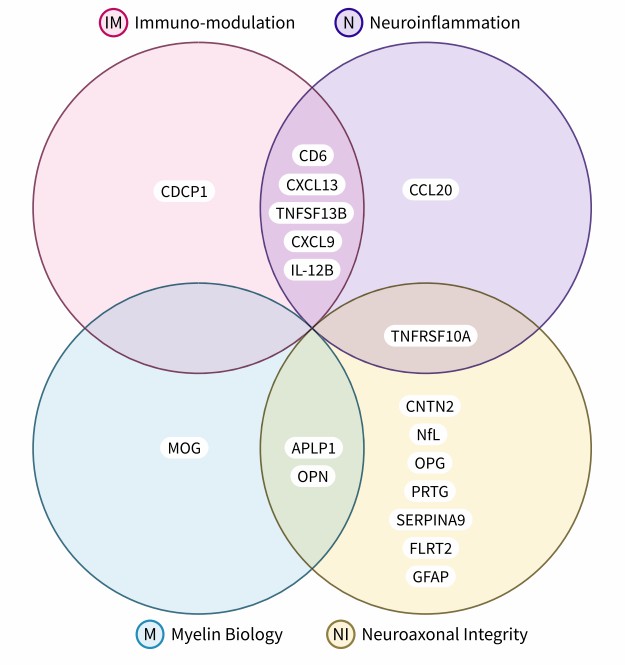 Figure 2: The custom Olink panel quantifies 21 proteins and employs an algorithm to generate four distinct disease pathway scores, which are integrated into a composite disease activity score. (Jalaleddini, K., et al. 2024)
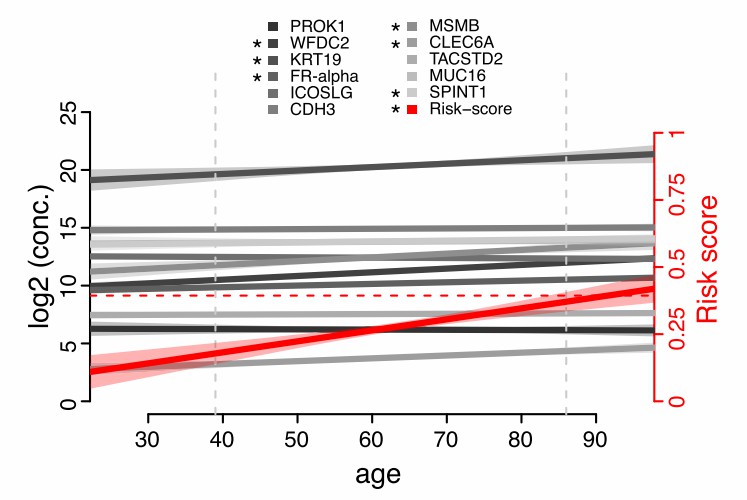 Figure 3: Proteins and risk score in healthy individuals (NSPHS cohort, N = 87) in relation to age. (Enroth, S., et al. 2022)
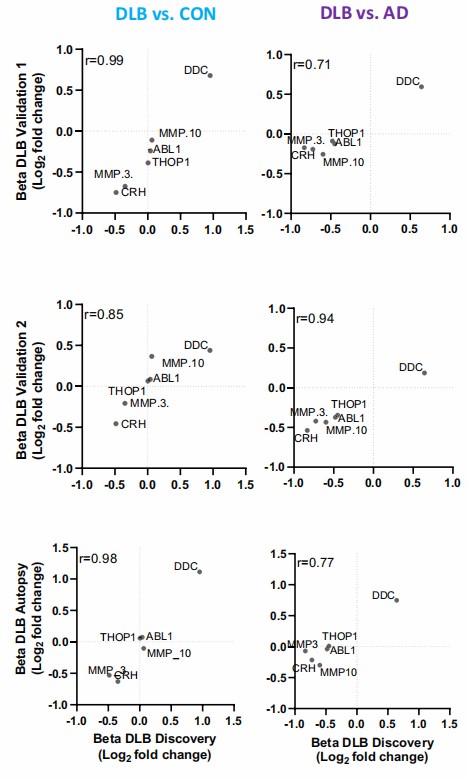 Figure 3: Scatter plots compare the beta-coefficients from the discovery phase with those from three validation cohorts, showing their Spearman correlation. (del Campo, M., et al. 2023)
Sample Requirements for Customized Olink Focus Panel
1. Sample Types and Volumes
- human serum and human plasma (commonly collected using EDTA, citrate, or heparin as anticoagulants).
- Other biological fluids: Cerebrospinal fluid, cell culture supernatants, and tissue lysates.
- The required volume is typically only 1 µL of plasma, serum, or CSF.
2. Sample Collection, Handling, and Storage
- Collection and Handling: Blood samples should be collected following standardized protocols to avoid pre-analytical variations. For plasma or serum, it is essential to process the samples promptly after collection, by centrifugation to separate cells, and then aliquot the supernatant for storage.
- Storage Conditions: Processed samples should be stored at -80°C to preserve protein stability. Repeated freeze-thaw cycles can cause protein degradation and should be minimized. It is highly recommended to aliquot samples in single-use volumes to avoid this issue.
3. Sample Quality Assessment and Control
- Pre-assessment: Before proceeding with the Olink Focus assay, samples should be screened for common quality issues. Avoid using samples that show signs of severe hemolysis (red blood cell rupture) or lipemia (high lipid content), as these conditions can interfere with the assay's sensitivity and increase background noise.
4. Common Pitfalls and Recommendations
- Low Detection Rate: If a high proportion of proteins fall below the Limit of Detection (LOD), it can result from using degraded samples, samples with interfering substances (like hemoglobin from hemolysis), or if the selected protein panel is not appropriate for the sample type being analyzed.
- Poor Replicate Consistency: Inconsistent results between technical replicates or across batches can arise from improper sample handling, pipetting errors when aliquoting the very small volumes, or not using bridge samples for normalization when projects are run at different times.
FAQs
How do I choose between Olink Flex and Olink Focus for my project?
Your choice depends on the level of customization, quantification needs, and project goals.
- Choose Olink Flex if: Your priority is speed and agility in validating a set of known protein candidates (21 or fewer) that are available in its pre-validated library. It's ideal when relative quantification (NPX) meets your needs, or when you require a cost-effective solution for studies like longitudinal monitoring or rapid hypothesis testing. The standardized process offers efficiency.
- Choose Olink Focus if: Your project involves novel targets or requires the development of new assays. It is the preferred choice when your research or application demands absolute quantification values (pg/mL) and a rigorously validated panel tailored to your specific sample type and study context. This option is suitable when the project justifies the additional time and investment for a deeply customized solution.
What are the main applications of Olink Focus panels?
Olink Focus panels are primarily designed for the validation and application of specific protein signatures discovered in initial screening phases. They are particularly valuable in:
- Confirming the association of a specific protein signature with a disease in independent patient cohorts.
- Creating targeted protein panels capable of differentiating between disease states.
- Monitoring targeted protein responses to intervention-based approaches within research studies. This application allows for the dynamic tracking of protein-level changes following interventions, providing insights into biological responses.
References
- Jalaleddini, K., Jakimovski, D., Keshavan, A. et al. Proteomic signatures of physical, cognitive, and imaging outcomes in multiple sclerosis. Ann Clin Transl Neurol 11, 729-743(2024).
- Enroth, S., Ivansson, E., Lindberg, J.H. et al. Data-driven analysis of a validated risk score for ovarian cancer identifies clinically distinct patterns during follow-up and treatment. Commun Med 2, 124 (2022).
- del Campo, M., Vermunt, L., Peeters, C.F.W. et al. CSF proteome profiling reveals biomarkers to discriminate dementia with Lewy bodies from Alzheimer´s disease. Nat Commun 14, 5635 (2023).