Submit Your Request Now
Key takeaways
- Tissue-heavy cohorts fail more often from interpretation drift than from the ability to measure proteins. The planning work is about protecting comparability.
- In a case–control design, the most important matching is often tissue handling and pathology context, not diagnosis labels.
- "FFPE" is usually not just a sample-format question. It's a signal that you need to define preservation history, section strategy, and decision intent before you scale.
- A large cohort is valuable when it supports a decision. If your biological question is broad, bigger N can amplify ambiguity.
Introduction
Tissue-based biomarker projects often start with a reasonable premise: "We have a large set of case and control tissues—can we profile proteins and learn something clinically relevant?" The trap is that teams jump to panel selection before they've clarified what the study is meant to decide.
In plasma cohorts, the planning center of gravity is often matrix consistency, batch structure, and the downstream statistical model. In tissue-rich cohorts—especially when FFPE is involved—the center of gravity shifts: local biology, heterogeneous cell composition, and preservation history can dominate the signal. If those variables aren't controlled or at least documented, the study can become analytically feasible but biologically hard to interpret.
We see this pattern in feasibility-stage conversations: teams ask for panel recommendations, but the real work is defining the comparison and protecting interpretability.
This guide is a planning framework for teams scoping FFPE-derived or tissue-heavy case–control cohorts. If you want broader oncology context first, start with our overview of Olink proteomics in oncology and biomarker discovery. The goal here is simpler: clarify the questions that determine whether the project is realistic, interpretable, and worth scaling.
Tissue-heavy cohorts are not planned the same way as plasma-based Olink studies
Tissue projects are driven by local biology, not just circulating signal
In plasma, the sample is already a mixture—many localized processes get "averaged" into a systemic readout. Tissue is different. Your measured proteins can shift with cell type composition, stromal fraction, immune infiltration, necrosis, and microanatomy. That means your primary risk is not only analytical noise—it is that your "case vs control" contrast becomes a proxy for tissue composition differences you didn't intend to study.
Practically, this pushes tissue projects toward better pathology context: what the tissue actually contains, and whether the sections you compare are comparable.
Case–control tissue comparisons amplify preanalytical differences quickly
Tissue handling can introduce systematic differences that look like biology. Warm/cold ischemia, delay-to-fixation, fixation duration, and processing conditions can change biomolecule integrity and assay behavior. A tissue biomarker literature review by True (2014) emphasizes that variables such as ischemia times and fixation conditions can materially affect tissue-based biomarker measurements, and that these variables should be controlled and reported where possible.preanalytical variables that affect tissue biomarker assays
If cases and controls come from different hospitals, different archival eras, or different pathology workflows, you should assume comparability risk until proven otherwise. (For broader cross-matrix handling principles, see Olink sample preparation guidelines across matrices.)
FFPE interest often signals a project-design question, not just a panel question
When a team asks, "Can we do this on FFPE?", they're often asking something bigger:
- Are the tissues comparable enough to interpret a cohort-level contrast?
- Is there enough material and metadata to run a feasibility gate before scaling?
- Is the study exploratory discovery, immune-context profiling, or intended as a discrimination model?
FFPE doesn't just change extraction. It changes how you plan your cohort, your decision gates, and your expectations for interpretability.
Before discussing panels, define what kind of tissue comparison you actually want to make
Think of this as Olink tissue cohort study design: you're defining what the comparison means, what must be matched, and what would make the result interpretable.
Are you trying to distinguish cases from controls, stratify phenotypes, or profile immune context?
A tissue cohort can serve very different goals:
- Discrimination: separate disease vs control (or subtype A vs subtype B)
- Stratification: find protein patterns that track with severity, stage, response, or histology
- Immune context profiling: characterize immune infiltration/activation programs and relate them to outcomes
Each goal requires different metadata, matching discipline, and validation logic. If you don't pick the primary goal, you can end up with an exploratory dataset that produces plausible stories but no decision-ready conclusion.
Tissue biomarker discovery and tissue discrimination are not always the same goal
"Biomarker discovery" can mean identifying biology-relevant proteins; "case–control discrimination" implies building a contrast that remains stable under the confounders your cohort contains. Those two aims overlap, but they're not identical.
For broader framing of discovery → verification → validation thinking, use a general biomarker workflow as context, but keep tissue-specific constraints in the foreground. (For an overview, see the internal guide on protein biomarker analysis framework.)
A large cohort should still begin with a narrow biological question
Large N can give you statistical power, but it cannot rescue a vague question. A feasibility-stage tissue project benefits from a deliberately narrow contrast—one that you can defend with pathology context and matching.
A good "narrow" question sounds like:
- "In matched tumor and adjacent normal from the same resection, what immune programs differ?"
- "Within a single tumor type, do responders vs non-responders show differences consistent with immune activation?"
- "In cases vs controls processed under comparable fixation and storage, can we identify a small set of decision-relevant proteins?"
If you can't state your contrast in one sentence, you probably aren't ready to scale.
Table: What is your tissue cohort study actually trying to prove?
| Study aim | What it requires | What it does not require | Implication for panel scope |
| Case vs control discrimination | tight handling comparability; clear case/control definitions; batch/site plan; validation intent | deep mechanistic interpretation | start with feasibility gate; focus on decision-relevant proteins |
| Phenotype stratification | robust clinical metadata; subgroup sizes; careful confounder control | perfect case/control matching | broader coverage may help; plan for covariate modeling |
| Immune context profiling | pathology/immune context (tumor content, infiltration proxies); consistent region strategy | cohort-level "single signature" | emphasize immune and inflammation pathways; define tissue region |
| Mechanistic tissue biology | defined tissue compartment; pathology annotation; hypothesis-driven endpoints | large N immediately | consider staged approach: focused pilot then scale |
Olink FFPE tissue planning: what changes when tissue is archived
This section is intentionally framed as FFPE biomarker discovery planning—what to clarify so the cohort remains interpretable as you scale.
FFPE projects begin with tissue context, not just assay interest
A common planning failure mode is treating FFPE as an afterthought: "We have blocks, so we'll just extract and run." In reality, FFPE samples are heterogeneous not only biologically but also historically—block age, fixation conditions, and storage are often variable across archives.
A useful way to frame FFPE feasibility is as a tissue-comparability question: can you design a contrast where preservation history is not confounded with case/control status?
Preservation history, section strategy, and extraction logic matter early
At minimum, you want to specify and document variables that are known to influence tissue biomarker behavior.
For example, True (2014) summarizes methodological requirements for tissue-based biomarker studies and highlights practical variables such as ischemia times, fixation type and duration, tissue size, and storage considerations.
And broader biospecimen guidance emphasizes standardization and coding of preanalytical variables where possible (e.g., SPREC).
You do not need perfect documentation to start. But you do need a plan to prevent "cases are older blocks" from becoming the real study contrast.
The feasibility question should be explicit before the cohort is scaled
For FFPE cohorts, treat feasibility as staged gates: can you generate consistent readouts on representative material, are preservation variables confounded with case/control labels, and does the contrast remain interpretable under sensitivity checks?
FFPE proteomics reviews repeatedly emphasize that formalin-induced crosslinks and variable extraction efficiency can affect coverage and reproducibility; this is one reason feasibility should be demonstrated on representative material before committing full-scale budgets.FFPE proteomics challenges and limitations
Table: Questions to clarify before discussing FFPE-oriented protein profiling
| Planning variable | Why it matters | What the team should specify first |
| Tissue type and region | biology and cellular composition dominate signal | organ, lesion type, region strategy (tumor core vs margin vs adjacent normal) |
| Case/control sourcing | confounding risk | same site vs multi-site; collection years; biobank vs prospective |
| Fixation and processing context | preanalytic bias | fixation type (if known), time-in-fixative ranges, processing SOP differences |
| Block age and storage | drift over time | year ranges; storage conditions if known |
| Section strategy | comparability and material use | section thickness, number of sections per sample, macrodissection plan |
| Pathology context | interpretability | tumor content %, necrosis, hemorrhage, inflammation notes |
| Decision intent | analysis approach | exploratory discovery vs comparative vs validation-oriented |
CTA: sanity-check your FFPE feasibility inputs
If you're scoping an FFPE cohort and want a fast feasibility check, share (1) tissue type and region strategy, (2) preservation format and block age range, and (3) your primary comparison question for an initial planning discussion.
Large case–control tissue cohorts can look powerful on paper but still be hard to interpret
If your core use case is an Olink case-control tissue cohort, the planning work is mainly about matching, metadata discipline, and decision gates—not just sample count.
Cohort size does not rescue weak tissue comparability
A large N is valuable when your comparison is coherent. But if cases and controls differ systematically in handling, tissue region, or pathology context, scaling can increase confidence in the wrong conclusion.
A practical rule: if you cannot describe why a control tissue is a valid comparator biologically and preanalytically, treat your large cohort as high-risk regardless of N.
Cases and controls must be matched at the tissue-handling level, not just the diagnosis level
In tissue cohorts, "control" is often ambiguous:
- adjacent normal from the same resection
- normal tissue from a different indication
- benign disease tissue
- tissue from a different anatomic site
Each control type answers a different question. Adjacent normal is often biologically closer but can have field effects; unrelated normal can introduce handling differences.
Bias-control and study design guidance for cancer biomarker discoveries emphasizes how specimen selection and repository quality influence downstream validity.study design and bias control in cancer biomarker discovery
Bigger cohorts increase operational complexity, not just statistical confidence
Large tissue cohorts bring multi-site variation, multi-batch processing, uneven metadata quality, and uneven material availability. If you don't plan metadata and batch structure early, you can end with an "N=500" dataset that cannot answer the question you care about.
**⚠️ Warning**: In large tissue case–control cohorts, the fastest way to lose interpretability is to let preservation format, tissue region, and cohort definition become separate conversations.
When an oncoimmunology-style question is a good fit—and when it is still too broad
Immune-context protein questions can be powerful in tissue cohorts
Tissue is where immune context often matters most, but it is easy to over-generalize.
"Oncoimmunology" is still too broad unless the comparison is defined
If your stated goal is "oncoimmunology profiling," convert it into a contrast you can defend:
- Responder vs non-responder (predictive framing)
- Immune inflamed vs excluded (microenvironment phenotype framing)
- Tumor vs matched adjacent normal (local immune activation framing)
Even in immunotherapy settings, tissue biomarker modalities (e.g., PD-L1 IHC, TMB, gene-expression signatures) differ in predictive performance and context-of-use; this is a reminder to define the intended use early rather than assuming "immune panel = answer."tissue biomarker modalities used to predict PD-1/PD-L1 response
Tissue projects should narrow the immune question before asking for the broadest panel
A broad immune-oriented panel may be appropriate in exploration. But if your study needs to inform a decision (e.g., cohort enrichment, validation selection), the right question is often: "What immune axis matters in this tissue comparison?"
Mini-case pattern we often see: a large FFPE case–control cohort asks for an Olink oncoimmunology tissue panel, but cases and controls differ in tissue region and block age. The first decision is not panel breadth—it's whether the cohort can support a comparable immune-context contrast.
How to decide whether your project needs a broad exploratory screen or a narrower targeted strategy
Broad discovery is useful when the biology is still unresolved
Broad discovery can be the right choice when:
- you don't yet know which pathways are relevant
- you expect multiple biological axes to differ (immune + stroma + metabolism)
- you want to generate hypotheses for downstream validation
The risk in tissue cohorts is that broad discovery can also generate an overwhelming set of signals that are difficult to tie back to tissue comparability.
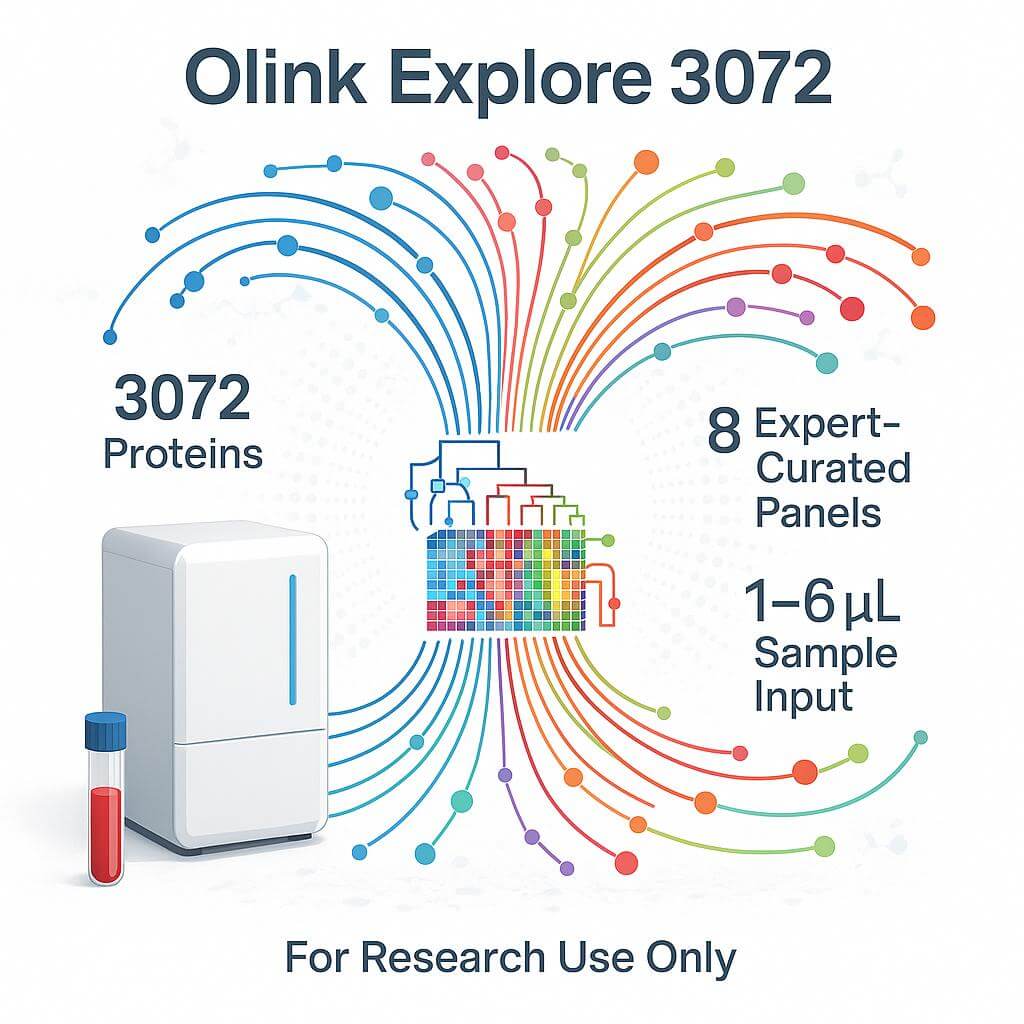
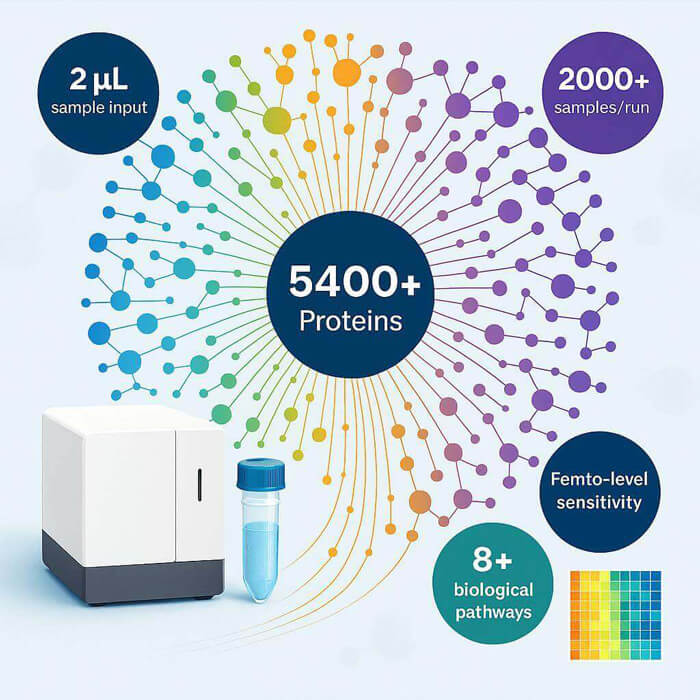
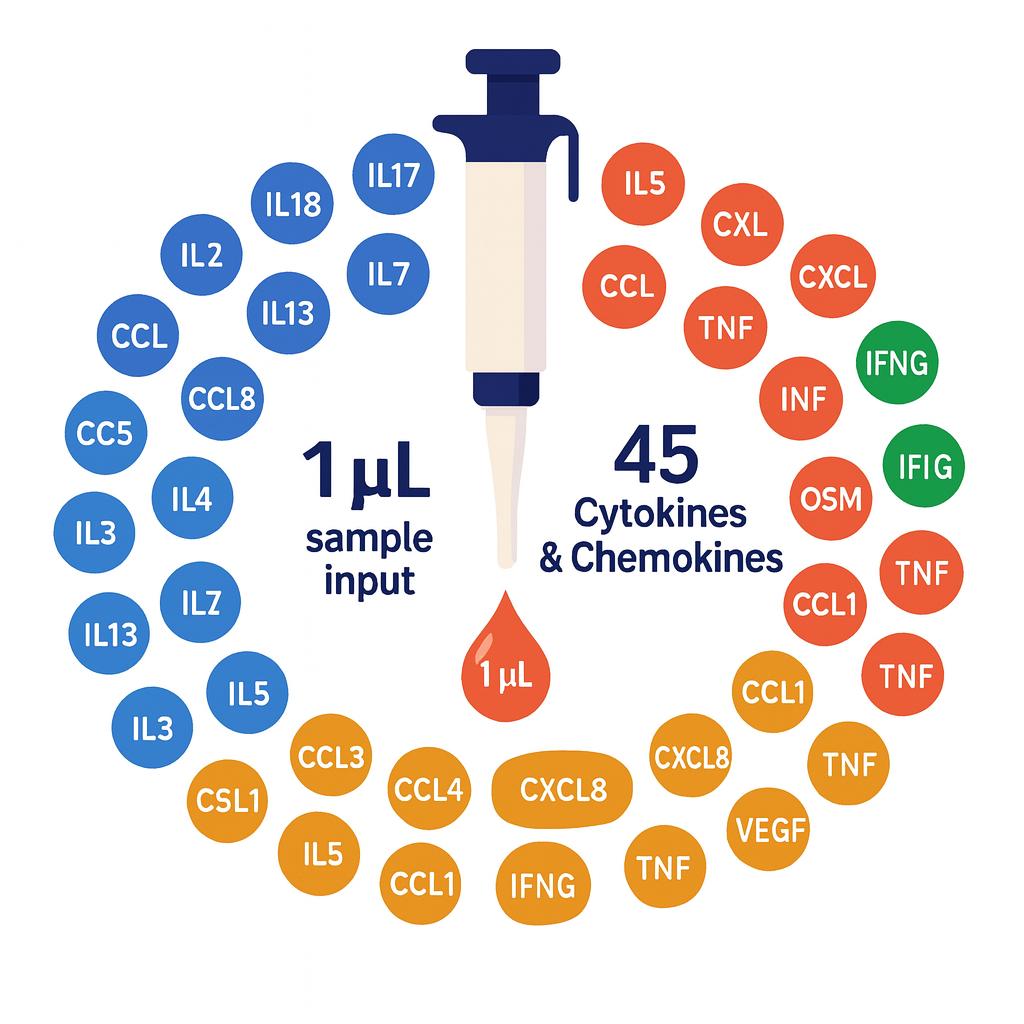
In early scoping conversations, it can help to separate the measurement layer from the study-design layer. Creative Proteomics pages on Olink Explore series, Olink Target series explain the intended use of each product family at a high level, while Olink analysis services describes analysis support options. The planning questions in this article still apply regardless of which route you take.
Narrower strategy makes more sense once the tissue question is already defined
A narrower strategy is often better when:
- your contrast is defined (e.g., responder vs non-responder in one tissue type)
- you need decision-readouts rather than broad biology
- you must control cost and conserve limited material
If you're transitioning from exploration to decision-making, a staged approach is usually safer: broad pilot → confirm comparability and top signals → then focus.
For an internal discussion of when standard panels fall short and why custom sets can be appropriate once the question is sharp, see when standard panels fall short: custom biomarker set strategies.
The real choice is not "bigger panel vs smaller panel," but "exploration vs decision"
Instead of asking "Should we run the biggest panel?", ask:
- What decision will this dataset support?
- What would count as success after the first tranche?
- What confounders must be ruled out before interpreting biology?
That framing keeps the study from turning into a descriptive exercise with no next step.
What to include when requesting support for an FFPE or tissue cohort project
Define the cohort and tissue source first
Start with the basics that determine comparability:
- tissue type and region strategy
- case/control definition and sourcing
- number of samples and whether multi-site or archival
Then explain preservation, processing, and available material
At minimum:
- preservation format (FFPE vs fresh frozen vs mixed)
- block age range (if FFPE)
- section availability and thickness
- macrodissection plan and pathology notes (tumor content %, necrosis)
If you can encode preanalytical variables (e.g., using SPREC concepts), even partially, it will make feasibility conversations faster and more precise.
Finally clarify whether the project is exploratory, comparative, or validation-oriented
Use a single sentence:
- "We are in exploratory discovery."
- "We are comparing cases vs controls and need interpretable differences."
- "We already have a candidate set and want focused verification."
If your goal is "case vs control discrimination," say what downstream decision you hope to make (e.g., select a short list for orthogonal validation).
If you want a structured intake, the internal resource the Olink quotation checklist for academic and translational teams can help you package the necessary details.
Before submitting your inquiry, clarify:
- cohort size and case–control structure
- tissue type and disease context
- whether samples are FFPE or another tissue-derived format
- whether all samples were processed comparably
- whether the goal is broad biomarker discovery, immune-context profiling, or case–control discrimination
- whether the project is still exploratory or already moving toward focused validation
Common mistakes in FFPE and large tissue cohort planning
Asking for a panel before defining the tissue comparison
If you can't state the comparison cleanly, the panel conversation is premature. The first outcome should be a defensible study aim and a comparability plan.
Assuming large N automatically fixes tissue heterogeneity
Large N can increase confidence in confounded differences. Matching and metadata discipline are the real "power multipliers" in tissue cohorts.
Treating preservation format as a minor detail
Preservation history often correlates with site, collection year, and workflow. If it correlates with case/control, it can dominate your signal.
Expanding cohort size before proving interpretability
If you haven't passed a feasibility/comparability gate on representative specimens, scaling is a risk multiplier.
FAQ
1) Can Olink support biomarker discovery in FFPE-oriented tissue projects?
It can support protein biomarker work in tissue-oriented projects, but FFPE cohorts need an explicit feasibility and comparability plan first. Treat "FFPE" as a signal to clarify preservation history, section strategy, and decision intent—then confirm feasibility on representative material before scaling. That's the core of Olink tissue biomarker feasibility in practice.
2) What should I clarify before discussing an FFPE case–control cohort?
Clarify (1) the tissue comparison question, (2) case/control sourcing and region strategy, (3) preservation history and block age ranges, and (4) what decision the first phase is meant to support.
3) Is a large tissue cohort automatically easier to interpret than a small one?
No. A large cohort increases value only when tissue handling and pathology context are comparable. Otherwise, it can increase confidence in confounded differences.
4) How should I define a useful oncoimmunology question in a tissue study?
Convert "oncoimmunology" into a concrete contrast (responder vs non-responder, inflamed vs excluded, tumor vs matched adjacent normal) and specify tissue region and pathology context so the immune comparison is interpretable.
5) When should a tissue cohort start broad, and when should it start narrower?
Start broad when biology is unresolved and you need hypothesis generation. Start narrower when the tissue contrast is defined and you need decision-readouts. A staged approach (broad pilot → focused verification) is often the safest.
6) What is the biggest planning mistake in tissue case–control biomarker studies?
Letting preanalytics and pathology context become afterthoughts. If cases and controls differ systematically in handling or region, your "biological signal" can be a workflow artifact.
7) What information should I include when requesting support for a tissue cohort project?
Provide tissue type/region strategy, case/control definition and sourcing, preservation format, available material per sample, known handling variables, batch/site structure, and whether the first phase is exploratory vs comparative vs validation-oriented.
8) How do I know whether my tissue project is still exploratory or already ready for focused validation?
If you cannot state the intended decision, your project is still exploratory. If you can name (a) the primary contrast, (b) the confounders you can control/document, and (c) the shortlist criteria for follow-up validation, you're closer to a focused strategy.
Conclusion
FFPE and tissue-heavy case–control cohorts can produce high-value protein insights—but only when interpretability is protected. The planning work is less about panel shopping and more about defining a defensible comparison, documenting preservation and handling variables, and using feasibility gates before you scale.
If you start with cohort comparability, tissue context, preservation clarity, and a narrow biological question, the downstream profiling becomes a structured decision-making exercise instead of an expensive descriptive dataset.
For a practical view of timelines, deliverables, and common decision gates, see what to expect from an Olink proteomics service workflow.
Next steps
If you're planning an FFPE or large case–control tissue cohort, share the tissue type, preservation format, cohort size, case–control structure, and whether your first phase is exploratory, comparative, or validation-oriented so we can scope a realistic, interpretable study plan.
---
Author: CAIMEI LI, Senior Scientist at Creative Proteomics
Author bio: Caimei Li is a Senior Scientist at Creative Proteomics, supporting proteomics study planning for biomarker discovery, translational research, and complex sample-to-data projects. Her work focuses on helping research teams define matrix suitability, cohort structure, and validation paths before large-scale execution.