Submit Your Request Now
Key Takeaways: Narrowing is not "picking the top hits." It's a disciplined translation step: define what the next study must prove, filter candidates by coherence and technical confidence, remove redundancy, and size the signature to the decision you need to make.
Broad Olink discovery screens are good at generating signal. They are not designed to hand you a final biomarker signature.
That gap is where many translational projects stall.
After a broad screen, teams often have dozens (sometimes hundreds) of "interesting" proteins. The challenge is no longer finding candidates; it's converting a long list into a smaller, biologically defensible, and operationally realistic set that can survive focused validation.
In practice, the most common failure mode is treating discovery output as validation-ready: a ranked list becomes a signature before anyone has clarified what the next-stage study is supposed to decide.
This workflow guide focuses on what happens in between—using real post-discovery scenarios:
- An ALS project that needs to move from a broad candidate pool toward a multi-protein diagnostic framework that can be evaluated for discriminative performance.
- A heart failure study where a few adipokines look promising, but the team must decide whether to re-screen broadly across time points or narrow to a focused validation set.
Discovery success creates a new problem: too many plausible candidates
This is where Olink biomarker validation becomes a planning problem—not an assay problem.
Broad screens are good at surfacing signals, not final signatures
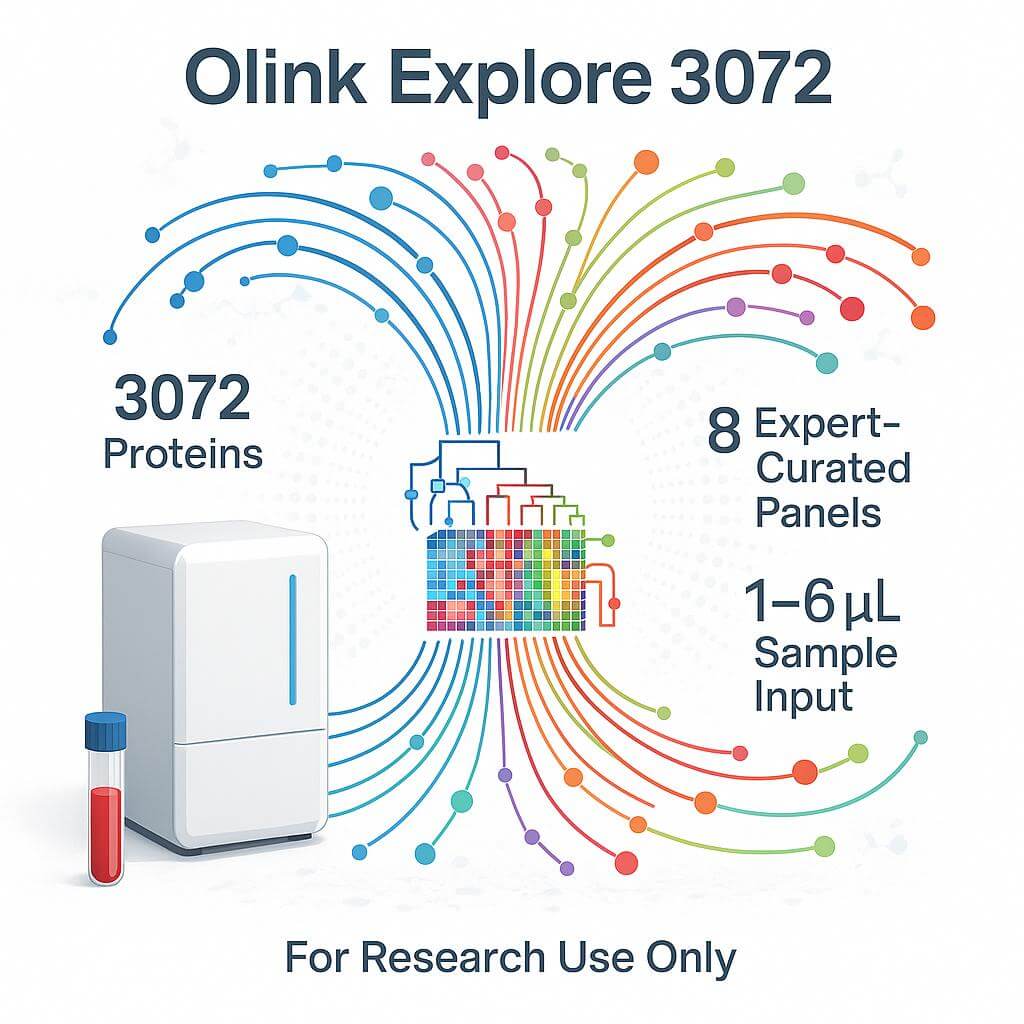
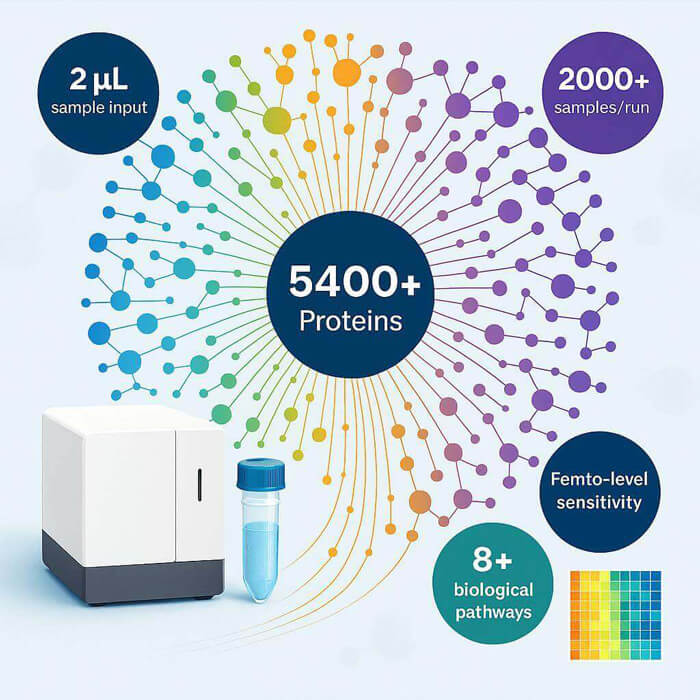
High-plex proteomics is optimized for breadth: detect many proteins with consistent assay performance and generate a "signal-rich" dataset for exploration. It can tell you what might be moving.
What it typically cannot tell you—without disciplined follow-up—is which subset is stable, interpretable, and aligned to the next decision you need to make.
A long hit list is not yet a validation strategy
A discovery hit list is often a mix of:
- true biology relevant to your endpoint
- correlated signals (multiple proteins reflecting the same underlying pathway)
- matrix artifacts and pre-analytical noise
- batch or site effects that look like biology
- "interesting" changes that are real but not useful for the next stage
Validation doesn't mean repeating the same work. It means designing a next-stage study that reduces uncertainty and increases decision confidence.
The goal is to reduce ambiguity without losing biological meaning
Narrowing is a translation step:
- reduce redundancy
- preserve biological coherence
- prioritize candidates that match the next-stage endpoint and study design
- keep the signature small enough to validate with your available samples and budget
Before narrowing, define what the next-stage study is actually supposed to prove
A practical way to avoid random shortlisting is to start with a single sentence:
"This next-stage study will be successful if it can prove ____."
This matters because biomarkers can serve different purposes (diagnostic, monitoring, predictive, etc.), and "validation" only makes sense once the intended use is defined. FDA's BEST glossary explicitly frames biomarkers by category and context of use (COU), which is the mindset you need even if you're not pursuing regulatory qualification: see FDA's BEST glossary biomarker categories (2021).
Are you confirming directionality, reproducibility, or discriminative performance?
Most post-discovery follow-ups fall into one of three buckets:
- Directionality / effect confirmation: "Do we see the same direction of change under the same clinical definition?"
- Reproducibility / robustness: "Does the signal survive batch, site, time, and biological heterogeneity?"
- Performance: "Can a small signature discriminate, stratify, or predict with acceptable error?"
Each bucket implies different shortlist size, cohort design, and analysis discipline.
A validation stage should answer a smaller, sharper question than discovery
Discovery tends to be exploratory by necessity: broad measurement, many hypotheses, imperfect priors.
Focused validation is the opposite. You narrow your question, pre-specify your plan, and reduce degrees of freedom.
That's the practical shift from discovery to validation proteomics: less exploratory richness, more protocol discipline—and fewer places for false positives to hide.
Peer-reviewed guidance on biomarker discovery and validation repeatedly emphasizes these risk controls—multiplicity, overfitting, bias from batch effects, and the need for internal and external validation (for statistical framing see Ou et al., "Biomarker discovery and validation: statistical considerations" (J Thorac Oncol, 2021)).
*(Note: This is linked once here to keep citations clean; later mentions refer back to this paper in prose without re-linking.)
Signature narrowing depends on the intended use of the next study
A useful shortlist is not "one-size-fits-all." If you're building:
- a diagnostic signature (e.g., ALS), you may tolerate some redundancy if it improves robustness across sites and improves discriminative performance.
- a monitoring signature (e.g., inflammation trajectory), you may prioritize proteins with consistent within-subject dynamics.
- a mechanism-anchored translational set (e.g., interferon-driven networks), you may prioritize pathway coverage over maximal classification accuracy.
Table 1. What should your next-stage study prove before you start narrowing biomarkers?
| Validation goal | What it requires | What it does not require | Implication for signature size |
| Confirm directionality | Same endpoint definition; comparable matrix; basic QC consistency | High-performing classifier | Small-to-moderate (keep enough to test the hypothesis) |
| Establish reproducibility | Cross-batch/site planning; randomization; technical confidence; protocol discipline | Novel biology exploration | Moderate (include redundancy only when it improves robustness) |
| Assess discriminative performance | Pre-specified model plan; independent evaluation; careful leakage control | Exhaustive pathway coverage | Small (optimize for stability + performance, not breadth) |
| Prioritize for translation | Clear decision criteria; sample constraints acknowledged; feasible future assay path | "Keep everything just in case" | Small-to-moderate, sized to next decision and operational reality |
Not every interesting hit should move forward (Olink candidate biomarker prioritization)
Statistical significance alone is not enough
Discovery datasets are high-dimensional. Even with appropriate multiple-testing control, you will surface changes that are real but not reproducible in your intended next-stage setting.
Two practical reminders:
- A protein can be statistically convincing and still fail the next stage if it is unstable across sites, sensitive to pre-analytical variation, or driven by a confounder.
- A protein can be modest in discovery and still be valuable if it is stable, biologically central, and matches the next-stage endpoint.
Biological coherence matters more than isolated signal chasing
The most defensible shortlists usually tell a coherent story:
- multiple proteins in the same pathway moving consistently
- signals that align with known disease biology or a credible mechanistic hypothesis
- relationships that make sense across time points (for longitudinal) or across subgroups (for heterogeneous disease)
Coherence is also a redundancy-management tool. If five cytokines are strongly correlated and all map to the same upstream driver, your next stage may only need one or two representatives—unless you have a specific reason to keep more.
Strong shortlist candidates usually survive more than one filter
In practice, "move-forward" candidates tend to satisfy several of these simultaneously:
- effect pattern: consistent direction across relevant comparisons
- cohort fit: relevant to the endpoint definition and matrix
- technical confidence: less sensitive to batch/site artefacts; measurement behavior is interpretable
- biological plausibility: fits a pathway, cell type, or mechanism you can defend
- utility: can actually answer the next-stage question
This is not a computational SOP. It's a selection discipline.
How to turn a discovery list into a focused biomarker shortlist (Olink focused validation)
If you came here searching for how to narrow a biomarker signature after discovery, this section is the core workflow.
Treat narrowing as a workflow with explicit checkpoints. The goal is not to keep shrinking forever—it's to reach a signature that is the right size for the next study.
You can think of this as Olink signature refinement: preserving meaning while reducing ambiguity, redundancy, and downstream validation risk.
Start by grouping proteins by biological role, not by rank alone
A ranked list is a poor organizing system. Instead, start by labeling candidates into biological "buckets" that match your disease context:
- immune activation modules (e.g., interferon response vs chemokine trafficking)
- tissue injury / organ-specific processes
- metabolic/adipokine regulation
- vascular inflammation and remodeling
This step forces interpretability early. It also reveals whether your shortlist is accidentally dominated by one process because that pathway is simply the loudest in discovery.
Remove redundancy before adding more complexity
Redundancy reduction is where many shortlists fail.
A focused validation signature should avoid including multiple proteins that are essentially proxies for the same underlying axis—unless you need redundancy for robustness.
Practical ways teams reduce redundancy without turning the project into an ML exercise:
- pick representative proteins per pathway/module
- prefer proteins with clear, stable behavior over fragile high-variance hits
- avoid stacking highly correlated chemokines/cytokines "because they all moved"
If you do use model-based selection, keep it disciplined. A recurring theme in the biomarker literature is that feature selection and model evaluation must be designed to avoid overfitting and leakage, and must be validated on independent data where possible (see Ou et al., J Thorac Oncol 2021, referenced above). For ML-specific anti-patterns in biomarker work, a practical checklist is summarized in "Ten quick tips" for ML-based biomarker discovery/validation (2022).
Keep the shortlist sized for the next study—not for the original curiosity
A useful question:
"If we validate this set successfully, what decision will it unlock?"
This is the practical difference between a biomarker shortlist after proteomics screening and a validation-ready signature.
If the answer is unclear, the signature is probably still too broad.
Also, panel size is a trade-off. Larger sets can look safer ("we won't miss anything"), but they increase cost, multiplicity burden, and interpretability complexity. Many omics selection methods explicitly frame this as a size–performance trade-off rather than a "more is better" rule (see panel-size vs performance trade-offs in omics biomarker selection (Bioinformatics, 2020)).
Table 2. From candidate list to focused signature: practical shortlist filters
| Candidate filter | Why it matters | Common mistake if ignored |
| Next-stage endpoint alignment | A candidate must map to what the next study will test | Validating "interesting biology" that cannot answer the study question |
| Biological coherence (module/pathway) | Produces interpretable signatures; reduces noise chasing | A signature that is a random collection of top p-values |
| Redundancy reduction | Shrinks signature without losing meaning | Carrying forward many correlated proteins that add little incremental value |
| Technical confidence and QC behavior | Improves reproducibility across batches/sites | Treating batch artifacts as biology; failing to plan randomization/blinding |
| Matrix and cohort feasibility | Keeps validation realistic given sample constraints | Designing a validation panel that the cohort cannot support |
| Longitudinal trajectory relevance (if applicable) | Protects dynamic markers that matter over time | Selecting only baseline-difference markers and losing trajectory biology |
| Subgroup robustness (if disease is heterogeneous) | Prevents signature collapse in real-world cohorts | Overfitting to one dominant subgroup in discovery |
Mid-article CTA
If you have discovery-stage Olink data (or a planned broad screen) and you're staring at a long candidate list, share your project stage, matrix, endpoint, and whether your list is still broad or already filtered. We can help you map a disciplined narrowing path toward focused validation.
When broad rescreening is still useful—and when focused validation is the better next step
Broad follow-up is still useful if the biology is unresolved
Broad re-measurement can be rational when:
- your discovery cohort was underpowered or unbalanced
- pre-analytical handling or batch structure makes signals hard to trust
- the disease biology is genuinely unclear and you still need to map the space
In these cases, "narrowing" too early can lock you into a fragile story.
If you need a structured way to revisit cohorts, power, and QC before choosing your validation direction, start with Designing a Large-Scale Proteomics Study with Olink: Strategic Framework for Cohorts, Power, and QC.
Focused validation makes more sense once the project question has narrowed
Focused validation is the better next step when:
- you can name the next-stage question in one sentence
- you have a plausible biological story (modules, pathways, cell processes)
- you are ready to test reproducibility or decision performance
At this stage, moving toward a smaller set is not "reducing ambition." It is increasing decision quality.
The real decision is whether uncertainty is still broad or already selective
A simple heuristic:
- If uncertainty is still about what biology matters, stay broad.
- If uncertainty is about which candidates survive, go focused.
When the next step becomes "we need a tailored set because standard panels don't match our shortlist," you can then consider a custom set as a downstream option rather than a default pathway: When Standard Panels Fall Short: Custom Biomarker Set Olink.
How longitudinal, disease-heterogeneous, and translational projects should narrow differently
Longitudinal studies should protect trajectory-relevant proteins
In longitudinal designs, a biomarker's value is often in its trajectory, not its baseline difference.
Practical implications for narrowing:
- do not filter only on cross-sectional significance at baseline
- look for markers with stable within-subject patterns aligned to your time-point structure
- protect proteins that track treatment response windows or disease transitions
If you're planning validation time points and batch structure, it helps to keep QC and comparability front and center. The immune-profiling discovery→validation workflow is a useful reference for how to think about consistency across phases: Olink Immune Profiling in Translational Research: From Discovery to Validation.
Heterogeneous diseases need signatures that survive subgroup complexity
For heterogeneous diseases, narrowing is not just about removing noise—it's about preventing "signature collapse" when the cohort shifts.
Practical protections:
- test whether candidate proteins behave consistently across clinically meaningful strata
- prefer candidates with stable directionality across subgroups (or explicitly design subgroup-specific signatures)
- avoid letting one dominant subgroup define the entire shortlist
In oncology cytokine/chemokine shortlist requests, this is a common pattern: a discovery cohort's inflammatory signature may be driven by tumor microenvironment composition in one subgroup, and disappear in another. Narrowing must be subgroup-aware.
Translational projects should narrow toward usable questions, not endless candidate expansion
Translational programs often drift into "one more round of discovery."
A disciplined alternative is to define a translational decision and narrow toward it:
- Go/no-go for a mechanism hypothesis
- Selection of pharmacodynamic/response markers for early trials
- Monitoring markers to assess pathway engagement
If multi-omics is available, it can be used to triangulate and stabilize prioritization rather than to expand the candidate list. For example, proteins supported by concordant transcriptomic signals or genetic associations can be easier to defend as next-stage candidates. See Integrating Olink Proteomics with Genomics and Transcriptomics for Better Biomarker Decisions.
How to discuss focused validation with a service provider
Share what stage the project is in
A provider can only help you narrow well if they understand whether you are:
- still exploring biology
- testing reproducibility
- evaluating performance for a specific decision
Avoid sending only a ranked list without context.
Explain whether the candidate list is exploratory or already prioritized
If your list is still broad, say so.
If it has already been filtered, describe your filters (pathway coherence, technical confidence, subgroup stability, etc.). This prevents the next-stage design from undoing your rationale.
Clarify what the next-stage panel is meant to decide
This is the key question. A focused validation panel should be built around what it must decide—not around what was most interesting in discovery.
If technical confidence is a concern, clarify whether you need technical replicates and how you plan to handle sample constraints. A practical guide is Do You Need Olink Technical Replicates? How to Balance Confidence, Sample Limits, and Study Goals.
Before submitting your inquiry, clarify:
- what the discovery stage already showed
- whether the candidate list is broad or already filtered
- whether the next study is for confirmation, prioritization, or translational narrowing
- whether the same matrix and cohort logic will be retained
- whether the shortlist should stay broad enough for mechanism, or narrow enough for focused validation
Common mistakes when moving from discovery to validation
Treating every discovery hit as validation-worthy
This produces bloated panels, high multiplicity burden, and an unclear success criterion.
Keeping too many redundant proteins in the shortlist
Redundancy makes the signature harder to interpret and increases the odds that the "signature" is just one pathway measured five times.
Narrowing without defining the next-stage question
A shortlist without a decision is just a smaller list.
Confusing exploratory richness with validation discipline
Discovery rewards breadth. Validation rewards clarity.
FAQ
1) How many proteins should move forward after a broad Olink discovery study?
There is no universal number. The right size is the smallest set that can answer the next-stage question with acceptable confidence, given your cohort size, heterogeneity, and matrix constraints.
2) What makes a biomarker candidate strong enough for focused validation?
A strong candidate typically survives multiple filters: endpoint alignment, biological coherence, technical confidence, and robustness across the cohort structure you expect in validation.
3) Should I re-run a broad panel or switch to a narrower validation strategy?
Re-run broad if uncertainty is still about what biology matters (e.g., unresolved mechanisms, QC concerns, underpowered discovery). Go narrower if uncertainty is selective—i.e., you already have plausible biology and now need reproducibility or decision performance.
4) How do I reduce redundancy in a candidate protein list?
Group candidates by biological role, then select representatives per module/pathway unless redundancy is specifically needed for robustness. Avoid carrying forward many highly correlated proteins that do not add incremental decision value.
5) Does a validation shortlist need to be disease-specific or pathway-specific?
It depends on your intended use. Mechanism-anchored translational questions often benefit from pathway coverage. Performance-driven diagnostic signatures may include cross-pathway markers as long as they are stable and interpretable.
6) How should longitudinal data influence shortlist selection?
Protect trajectory-relevant proteins. Do not narrow only on baseline differences; prioritize markers with stable within-subject dynamics aligned to your time-point design.
7) What should I tell a provider if I want to move from discovery to focused validation?
Share the matrix, endpoint, cohort structure (including sites and time points), the current status of your candidate list (broad vs filtered), and what the next stage is meant to decide.
8) What is the biggest mistake teams make after an Olink discovery study?
Treating a ranked discovery hit list as a validation strategy. The disciplined step is defining the next-stage decision and narrowing to a signature that is sized—and justified—for that decision.
Conclusion
A successful discovery study doesn't end with a ranked list of proteins. It becomes valuable when the team converts broad signals into a smaller, biologically defensible, and next-stage-ready validation strategy.
If you define what the next study must prove, filter candidates by coherence and technical confidence, remove redundancy, and size the signature to the decision, you can move from signal-rich exploration to focused validation without losing biological meaning.
Next steps (end CTA)
If you're moving from broad Olink screening to focused validation, submit your project stage, matrix type, whether your candidate list is still broad or already filtered, and whether your next step is confirmation, prioritization, or translational narrowing. The intake checklist here makes the handoff faster: What Information Should You Prepare Before Requesting an Olink Quote? The Olink Quotation Checklist for Academic and Translational Teams
Author: CAIMEI LI, Senior Scientist at Creative Proteomics
Bio: Caimei Li is a Senior Scientist at Creative Proteomics, supporting proteomics study planning for biomarker discovery, translational research, and focused validation workflows. Her work centers on helping teams move from broad signal generation to more interpretable and project-ready biomarker strategies.
LinkedIn: Caimei Li