

 Submit Your Request Now
Introduction
A good multi-omics study design starts before any data are generated. The hardest part isn’t running three assays—it’s coordinating sample allocation, controlling freeze–thaw exposure, keeping sample IDs and metadata consistent, executing platform-specific QC, aligning batch structure, choosing an integration strategy, and defining final deliverables.
Proteomics, metabolomics, and lipidomics also measure different molecular layers. They differ in dynamic range, missingness behavior, technical artifacts, and how results should be interpreted. Treating them as interchangeable tables—or assuming that three datasets automatically become an integrated study—creates avoidable errors in matching, QC interpretation, and statistics.
This guide focuses on operational decisions that make multi-omics integration possible in a single serum cohort, with Olink inflammation-focused proteomics as the proteomic layer. If you’re planning a service-backed workflow, see our overview of integrated Olink proteomics and multi-omics services for how these layers can be coordinated end-to-end.
Key Takeaway: Multi-omics integration is a planning problem first, and a statistical problem second.
Multi-Omics Study Design Starts Before the First Assay
Define One Shared Biological Question
A coordinated multi-omics study design starts with one shared biological question that all layers can address. Without that anchor, you don’t get integration—you get three platform reports.
In inflammation-oriented work, shared objectives often include inflammatory regulation, immune–metabolic interactions, treatment response, disease-associated pathway changes, and biomarker discovery. The key is that each omics layer contributes a different perspective on the same hypothesis, using the same sample universe and the same study definitions.
Three Datasets Do Not Automatically Create an Integrated Study
Producing proteomic, metabolomic, and lipidomic outputs from the same cohort does not guarantee meaningful integration. Integration needs comparability and traceability.
At minimum, the project requires shared sample identifiers, compatible group definitions, consistent covariates, prespecified integration questions, and coordinated analysis outputs. If those are not set upfront, downstream analysis drifts into opportunistic correlations and inconsistent reporting.
Define Deliverables Before Sample Allocation
Deliverables determine volume allocation, batch structure, and metadata capture. Before aliquoting, decide whether you need independent platform reports, cross-omics correlation outputs, pathway integration, network analysis, candidate prioritization, or predictive modelling.
Different deliverables imply different constraints. For example, pathway-level integration can sometimes tolerate lower overlap than feature-level cross-omics correlation, while predictive modelling typically requires stricter overlap and tighter leakage control.
Build a Sample-Volume and Aliquoting Plan
Create a Per-Sample Volume Budget
A realistic per-sample volume budget is the foundation of multi-omics study design. Build it before any tube is opened, and circulate it to everyone who handles samples.
A complete budget usually accounts for Olink assay input, metabolomics input, lipidomics input, dead volume, transfer loss, repeat-testing reserve, and a backup aliquot.
Do not use a universal serum-volume requirement. Exact inputs depend on the laboratory workflow and must be confirmed by the editor or testing lab. The operational goal is to avoid two predictable failures: insufficient volume for one platform, and repeated thawing because dedicated aliquots were never prepared.
Control Freeze–Thaw Exposure
Freeze–thaw is not a uniform stressor. Different analyte classes can respond differently to additional cycles or to delays after thawing. That is why freeze–thaw history should be tracked as a study variable.
In combined proteome–metabolome work, time and temperature in the pre-analytical phase can be dominant sources of variability (see the 2022 study on combined proteome–metabolome pre-analytics). In plasma metabolome/lipidome stability testing, an added freeze–thaw or post-centrifugation delay has been associated with measurable shifts in specific metabolites and lipids (see the 2026 stability study).
Practically, that supports three rules:
- Prepare separate aliquots whenever possible.
- Record sample history (freeze–thaw count, thaw duration, post-thaw delay, storage interruptions).
- Define whether samples with uncertain history are eligible for integration outputs.
Decide the Order of Assays
Assay order is a design decision, not just scheduling. Consider sample stability, required volume, available aliquots, repeat-testing risk, and platform availability.
A useful sequence is: define deliverables → build the volume budget → map aliquots → then schedule assays. If scheduling forces a higher-risk order (e.g., extra thaw events), treat that as a documented deviation that can be used as a covariate or exclusion criterion later.
Reserve Material for Follow-Up Work
Reserve material for repeat analysis, orthogonal validation, targeted confirmation, and unexpected QC failures. In practice, reserved aliquots are what prevent a study from being limited by re-collection rather than by biology.
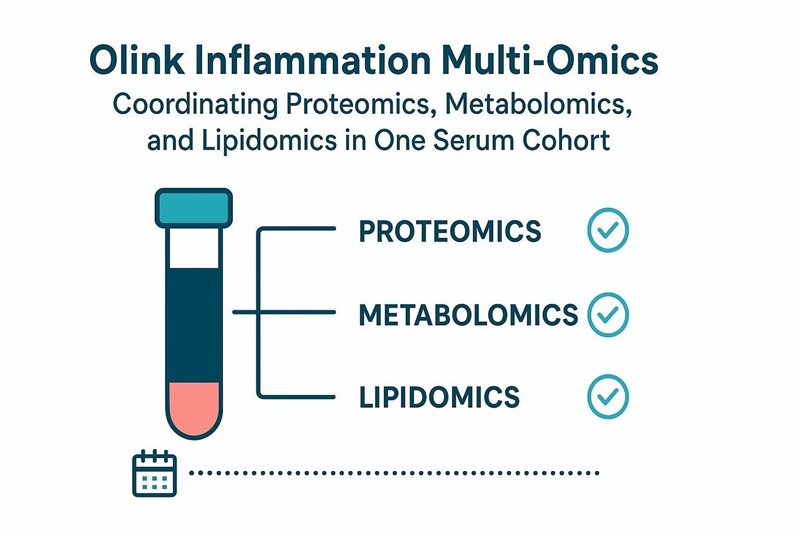 Figure 1. Sample-allocation planning for coordinated proteomics, metabolomics, and lipidomics analysis.
Use One Master Sample Manifest Across All Platforms
Maintain Stable Sample Identifiers
Multi-omics integration fails fast when identifiers drift. One master sample ID should be used across Olink proteomics, metabolomics, lipidomics, phenotype tables, and statistical analysis files.
Other identifiers (plate ID, injection sequence, instrument file name) can exist—but they must map back to the master ID and should not become the join key.
Record Biological and Experimental Variables
A master manifest should capture variables that matter to the study design and the integration objective.
Common fields include group, timepoint, treatment, site, sex, age, BMI, fasting status, collection time, processing delay, storage history, and freeze–thaw count.
Pre-analytics are worth treating as first-class metadata. For serum metabolomics, room-temperature delays can create detectable degradation signatures (see the 2015 serum pre-analytics study), which reinforces why history fields cannot be an afterthought.
Track Platform-Specific Sample Status
Track per-sample status by platform: passed QC, failed QC, repeated, excluded, missing from one platform, or insufficient volume. This prevents silent exclusions from turning into unexplained missingness.
Plan for Unequal Data Availability
Some samples will pass one platform but fail another. The multi-omics study design should define—before testing—how that will be handled.
Common options include complete-case analysis for certain integration outputs, platform-specific analysis with interpretation-level integration, or missing-data strategies where defensible. The right approach depends on the deliverable and on missingness mechanism, not on preference.
Align QC Without Forcing All Platforms into One QC Model
Olink-Specific QC
Olink workflows have their own QC logic, including sample QC, assay QC, plate/batch metadata, missingness behavior, and handling of below-range values.
Integration implications:
- Treat NPX (Normalized Protein eXpression) as a relative, log2-based proteomic scale.
- Do not treat NPX as directly comparable to metabolite intensities or lipid concentrations.
- Record plate and repeat structure so technical patterns can be assessed.
Metabolomics-Specific QC
Metabolomics QC typically relies on pooled QC samples, blanks, internal standards, retention-time stability monitoring, and drift assessment/correction.
Transparent QA/QC reporting has become a practical standard in untargeted metabolomics (see the 2022 QA/QC reporting guidance and the 2023 Analytical Chemistry review on LC–MS untargeted metabolomics practices).
Lipidomics-Specific QC
Lipidomics shares LC–MS QC fundamentals but adds lipid-class coverage questions, internal standards across classes, carryover sensitivity, batch drift behavior, and identification confidence. In many workflows, some annotations are class- or species-level rather than fully isomer-resolved; integration outputs should not overstate chemical specificity.
Shared QC Samples and Reference Materials
Pooled samples can help monitor batch behavior across workflows, but the same QC material does not serve the same analytical purpose on every platform. Use “shared QC” to coordinate documentation and batch monitoring—not to claim that QC thresholds are equivalent across technologies.
Map Batches Across Platforms
Maintain a cross-platform batch map that links Olink plate, metabolomics batch, lipidomics batch, run date, repeat status, and QC status. This is what turns “we saw a cluster” into a traceable explanation that can be acted on.
Prepare Each Omics Layer Before Integration
Process Proteomic Data Independently
Before integration, Olink proteomic data should be processed within its own QC framework: sample/assay QC review, missingness assessment, plate/batch behavior, covariate governance, and differential protein analysis aligned to the study design.
Process Metabolomic Data Independently
Metabolomics preparation typically includes peak/feature filtering, blank correction, normalization and drift correction, annotation review, missing-value review, and batch correction where justified.
Process Lipidomic Data Independently
Lipidomics preparation typically includes lipid identification and class annotation review, internal-standard normalization, explicit documentation of isomer limitations, and batch assessment/correction as appropriate.
Do Not Integrate Unstable Features
Features should not enter joint analysis only because they appear in raw output files. Remove or flag features with poor QC, high missingness, unstable signal, weak annotation, or strong technical bias.
⚠️ Warning: Integration can amplify technical noise if low-quality features are allowed into the joint layer.
Choose the Integration Method Based on the Research Question
Cross-Omics Correlation
Use correlation when the objective is to identify relationships between proteins and metabolites, proteins and lipids, or pathway-related molecular features that co-vary across matched samples.
Correlation does not establish causality. It can also be inflated by shared confounders (batch, sample handling, BMI, fasting status) if covariates are not aligned.
Pathway-Level Integration
Pathway integration is useful when the biological question is pathway-oriented or when feature-level overlap is limited. It can provide a more stable interpretation layer than a high-dimensional correlation table.
However, pathway databases can have unequal annotation depth across layers, redundant pathway definitions, and incomplete protein–metabolite relationships. Treat pathway outputs as structured interpretation, not as proof of mechanism.
Network Analysis
Network analysis connects inflammatory proteins, metabolic intermediates, lipid classes, and phenotypes into module-level structures. It can be a practical way to summarize multi-layer biology—if construction rules and filtering criteria are documented.
Latent-Factor and Multi-Block Models
Latent-factor and multi-block models capture shared structure while respecting that each omics block has unique variance. Conceptually, they reduce dimensionality, separate shared vs layer-specific patterns, and support interpretation through loadings and component associations.
For a method-family overview, see the 2020 review on multi-omics integration in biomedical research.
Predictive Modelling Requires Independent Validation
Predictive modelling is appropriate only when the target label, training/test separation, and validation plan are defined upfront.
Guardrails include cross-validation design that prevents leakage, avoiding feature-selection bias, and managing overfitting risk when features far outnumber samples. A useful framing of early vs intermediate vs late integration strategies is provided in the 2021 review on multi-omics integration strategies for machine learning.
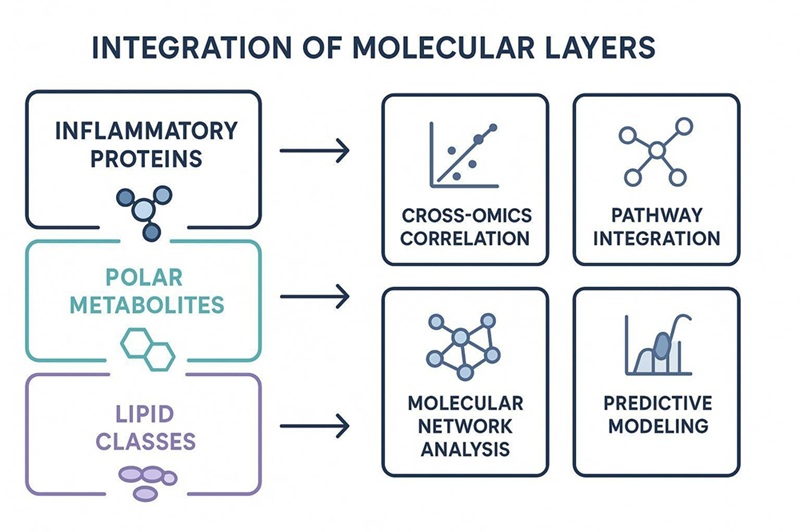 Figure 2. Common analytical routes for integrating proteomic, metabolomic, and lipidomic data.
Define Multi-Omics Deliverables Before Analysis Begins
Platform-Specific QC Reports
Retain a platform-specific QC report for each layer rather than compressing everything into a single “QC passed” statement. QC artifacts should remain readable and auditable on their own.
Cross-Omics Association Tables
If cross-omics testing is planned, standardize outputs so downstream teams can interpret them:
- Protein–metabolite associations and protein–lipid associations
- Effect size
- Statistical significance and multiple-testing correction
- Covariates used
- Direction of association
Joint Pathway and Network Outputs
Joint outputs may include integrated pathway tables (with evidence notes), network diagrams, hub-feature summaries, module-level phenotype associations, and interpretation notes that separate evidence from hypotheses.
Candidate Prioritization Table
A candidate prioritization table should combine statistical evidence with reproducibility indicators and annotation confidence, so follow-up work is driven by disciplined criteria rather than by significance alone.
Reproducible Analysis Records
Record software, package versions, filtering rules, normalization, models, covariates, and multiple-testing method. At minimum, keep a reproducible log that includes:
- Software and versions (e.g., Olink NPX processing pipeline version; R/Python packages)
- Explicit filtering criteria (e.g., feature missingness threshold, QC CV thresholds, blank filtering rules)
- Normalization and drift/batch correction choices (method, parameters, and when/why applied)
- Missing-data strategy for integration outputs (complete-case vs imputation, and justification)
- Model specifications (formula, covariates, contrasts), multiple-testing correction, and seed values where applicable
- File provenance (raw file IDs, run dates, plate/batch IDs) and a final sample inclusion/exclusion table
This is what makes the deliverables reusable.
Practical Templates (Copy/Paste)
Sample Manifest (Minimum Recommended Fields)
| Field | Description |
| master_sample_id | One stable ID used across all platforms (join key) |
| subject_id | Participant identifier (if applicable) |
| group / condition | Case/control or experimental group |
| timepoint | Baseline / follow-up, etc. |
| treatment | Treatment arm / dose (if applicable) |
| collection_date_time | Collection timestamp |
| processing_delay | Time from collection to processing |
| fasting_status | Fasted / non-fasted / unknown |
| sex | Biological sex |
| age | Age at collection |
| BMI | Body mass index (if available) |
| site | Collection site / center |
| specimen_type | Serum / plasma, anticoagulant if relevant |
| freeze_thaw_count | Number of freeze–thaw cycles |
| storage_history_notes | Interruptions, long holds, deviations |
| aliquot_map | Aliquot IDs and assigned platforms |
Cross-Platform Batch Map (Recommended Fields)
| Field | Description |
| master_sample_id | Join key |
| olink_plate_id | Olink plate identifier |
| olink_well | Plate well position |
| olink_run_date | Run/scan date |
| metabolomics_batch_id | LC–MS batch identifier |
| metabolomics_injection_order | Injection sequence |
| metabolomics_run_date | Run date |
| lipidomics_batch_id | LC–MS lipidomics batch identifier |
| lipidomics_injection_order | Injection sequence |
| lipidomics_run_date | Run date |
| qc_status_olink | pass / fail / repeat / excluded |
| qc_status_metabolomics | pass / fail / repeat / excluded |
| qc_status_lipidomics | pass / fail / repeat / excluded |
QC Checklist (High-Level)
- Olink: sample/assay QC review, plate effects, missingness, below-range handling, repeat structure documented
- Metabolomics: blanks + internal standards, pooled QC drift monitoring/correction, RT stability, annotation confidence noted
- Lipidomics: class coverage + internal standards across classes, carryover checks, batch drift, identification confidence/isomer limits documented
- Cross-platform: final inclusion table, batch map finalized, covariates aligned, integration-ready feature set frozen
Common Multi-Omics Planning Mistakes
Allocating Samples After Assays Are Scheduled
Late allocation leads to insufficient volume, unnecessary freeze–thaw cycles, and missing reserve material for repeats.
Using Different Sample IDs Across Platforms
Inconsistent identifiers create matching errors that often look like biological missingness. One master manifest prevents most of these issues.
Treating Platform-Specific QC as Equivalent
QC frameworks are technology-specific. Olink QC cannot be reduced to LC–MS QC metrics, and vice versa.
Integrating Data Before Independent Quality Review
Poor-quality features should not be rescued through integration. Integration is not a repair strategy.
Reporting Correlation as a Mechanistic Relationship
Association does not prove regulation, direction, or causality.
Building Predictive Models with Too Many Features
Overfitting risk rises when the number of variables is large relative to the number of samples. If predictive modelling is a deliverable, define validation and feature-selection rules before analysis.
A Practical Multi-Omics Planning Framework
| Planning Question | Decision Required |
| What is the shared biological question? | Define the main cross-omics hypothesis |
| Which samples enter each platform? | Create one sample-allocation plan |
| How will freeze–thaw cycles be controlled? | Prepare dedicated aliquots |
| Which metadata are shared? | Build one master sample manifest |
| How will QC be handled? | Maintain platform-specific and cross-platform QC |
| Which integration method is appropriate? | Match the method to the research goal |
| What will be delivered? | Define tables, figures, code, and interpretation outputs |
| How will candidates be validated? | Reserve samples and plan follow-up assays |
Multi-omics value comes from coordinated design and interpretation, not from the number of datasets generated.
Frequently Asked Questions
Can the same serum sample be used for Olink, metabolomics, and lipidomics?
Yes—if the multi-omics study design includes a volume budget, dedicated aliquots, and a master manifest that keeps sample identity stable across platforms.
Should separate aliquots be prepared for each platform?
Whenever possible, yes. Dedicated aliquots limit freeze–thaw exposure and reduce scheduling-driven deviations.
Which assay should be performed first?
There isn’t one universal order. Decide based on stability risk, volume constraints, available aliquots, repeat-testing risk, and scheduling. Document the chosen order and any deviations.
How much backup volume should be retained?
Retain a defined backup aliquot if follow-up validation or repeat testing is part of the plan. Exact volumes depend on workflows and must be confirmed with the laboratory.
Can all three platforms use the same pooled QC samples?
Pooled QCs can support batch monitoring, but they do not serve identical purposes across platforms. Treat them as coordination aids, not as a single universal QC standard.
Must all assays be completed in the same batch?
Not necessarily. What matters is that batch structure is recorded and assessed within each platform, and that cross-platform batch effects multi-omics confounding is considered when interpreting associations.
Can NPX values be correlated with metabolite concentrations?
They can be correlated as variables across matched samples, but they are not directly comparable scales. NPX is a relative proteomic measure; metabolite outputs may be relative intensities or concentrations depending on workflow.
How should different data scales be normalized?
Normalize and QC each layer independently first. For integration, use block-aware scaling or component-based approaches rather than forcing a shared unit across NPX, metabolite intensities, and lipid concentrations.
What happens if a sample fails QC on only one platform?
Define this upfront. Common options include complete-case analysis for certain integration outputs, platform-specific analysis with interpretation-level integration, or missing-data strategies where appropriate.
Which multi-omics integration method should be used?
Choose based on the research question and data reality. Correlation is for pairwise associations, pathways for process-level interpretation, networks for module-level structure, and latent-factor/multi-block models for shared structure in high-dimensional settings.
How can false cross-omics correlations be reduced?
Reduce false positives by aligning covariates, mapping batches, filtering unstable features, and applying multiple-testing control. Use orthogonal validation for high-priority candidates when feasible.
Is pathway analysis sufficient for multi-omics integration?
It can be sufficient when the deliverable is interpretation rather than feature pairing, but it depends on annotation depth and database coverage. Many projects benefit from pairing pathway outputs with a candidate table.
When is a pilot study appropriate?
When sample volume is scarce, pre-analytics are uncertain, or the intended integration deliverable is sensitive to missingness and batch structure, a pilot can de-risk the final design.
What should a multi-omics report include?
Platform-specific QC summaries, a master manifest and batch map, primary results per layer, any planned cross-omics tables, pathway/network outputs where planned, a candidate prioritization table, and a reproducible analysis record.
References (Selected)
- Proteome–metabolome pre-analytical variability study (2022). PMCID: PMC9808085. https://pmc.ncbi.nlm.nih.gov/articles/PMC9808085/
- Plasma metabolome/lipidome stability study (2026). PMCID: PMC13106266. https://pmc.ncbi.nlm.nih.gov/articles/PMC13106266/
- Serum pre-analytics study (2015). PMCID: PMC4379062. https://pmc.ncbi.nlm.nih.gov/articles/PMC4379062/
- Untargeted metabolomics QA/QC reporting guidance (2022). PMCID: PMC9420093. https://pmc.ncbi.nlm.nih.gov/articles/PMC9420093/
- Untargeted metabolomics practices review (Analytical Chemistry, 2023). DOI: 10.1021/acs.analchem.3c02924. https://pubs.acs.org/doi/10.1021/acs.analchem.3c02924
- Multi-omics integration in biomedical research review (2020). PMCID: PMC7701361. https://pmc.ncbi.nlm.nih.gov/articles/PMC7701361/
- Multi-omics integration strategies for machine learning review (2021). PMCID: PMC8258788. https://pmc.ncbi.nlm.nih.gov/articles/PMC8258788/
Conclusion and CTA
Multi-omics integration begins before sample testing. Sample allocation, metadata governance, platform-specific QC, and analysis goals must be coordinated so integration questions are answerable. Each layer should pass independent QC before joint analysis. The integration method should follow the research question, and deliverables should be defined in advance.
Prepare the study objective, sample matrix, available volume, group structure, planned omics layers, shared metadata fields, and expected deliverables before beginning a research-use-only multi-omics project.
For Research Use Only. Not for use in diagnostic procedures.
About the Author, Editorial Review, and Contact
Author: Caimei Li, Senior Scientist (Creative Proteomics). LinkedIn: https://www.linkedin.com/in/caimei-li-42843b88/
Editorial review: This article was reviewed internally for technical accuracy and clarity by the Creative Proteomics team.
Last updated: 2026-07-20
Corrections and inquiries: /contact