Submit Your Request Now
Introduction
In the rapidly evolving field of proteomics, the ability to accurately quantify thousands of proteins across large sample cohorts has become crucial for both biomedical research and drug development. Olink Proteomics has established itself as a leader in this space, offering scalable solutions based on its proprietary Proximity Extension Assay (PEA) technology. Among its product portfolio, the Olink Explore 3072 and Explore 1536 platforms represent high-throughput solutions designed for large-scale studies, yet they cater to distinct research needs and scales.
Selecting the appropriate platform is not just a technical decision—it directly impacts study design, data quality, resource allocation, and ultimately, the return on investment in biomarker discovery and validation programs.
This article provides a comprehensive comparison between the Olink Explore 3072 and Explore 1536 platforms, focusing on their applicability across different study scenarios to guide decision-makers in selecting the optimal solution for their specific research requirements.
Research Scale Matching: Sample Numbers and Protein Coverage
The most fundamental consideration when choosing between the Explore 3072 and Explore 1536 platforms is the scale of your study. Both platforms are designed for large-scale proteomic profiling, but they target different magnitudes of sample throughput and protein coverage.
Project Scale Alignment
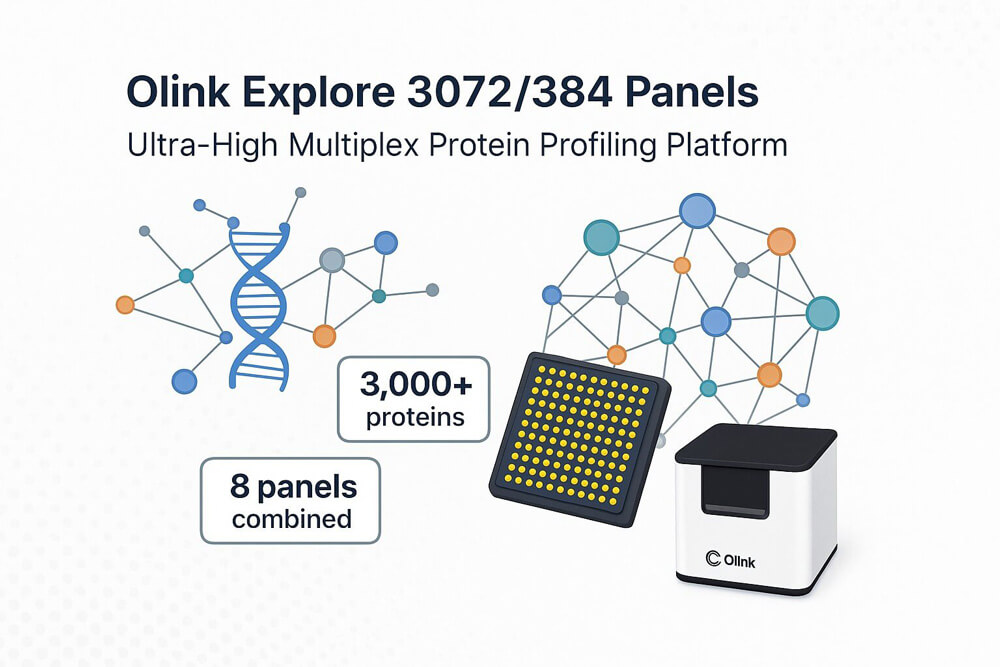
- Olink Explore 3072 is specifically designed for population-scale studies involving tens of thousands of samples. This platform's ultra-high throughput capacity makes it particularly suitable for major initiatives such as biobank studies and large prospective cohorts. A prominent example is its selection for the UK Biobank Pharma Proteomics Project (UKB-PPP), described as "the largest proteomics project in history". This platform enables researchers to analyze thousands of samples while measuring more than 3,000 proteins per sample, creating extensive datasets for biomarker discovery and validation.
- Olink Explore 1536 serves as a robust solution for medium to large-scale studies typically involving hundreds to a few thousand samples. While still offering high throughput, it balances protein coverage with practical considerations for more targeted research initiatives.
Technical Capacity Comparison
Table 1: Key Technical Specifications Comparison
| Parameter | Olink Explore 3072 | Olink Explore 1536 |
| Throughput | Ultra-high (population scale) | High (large cohort studies) |
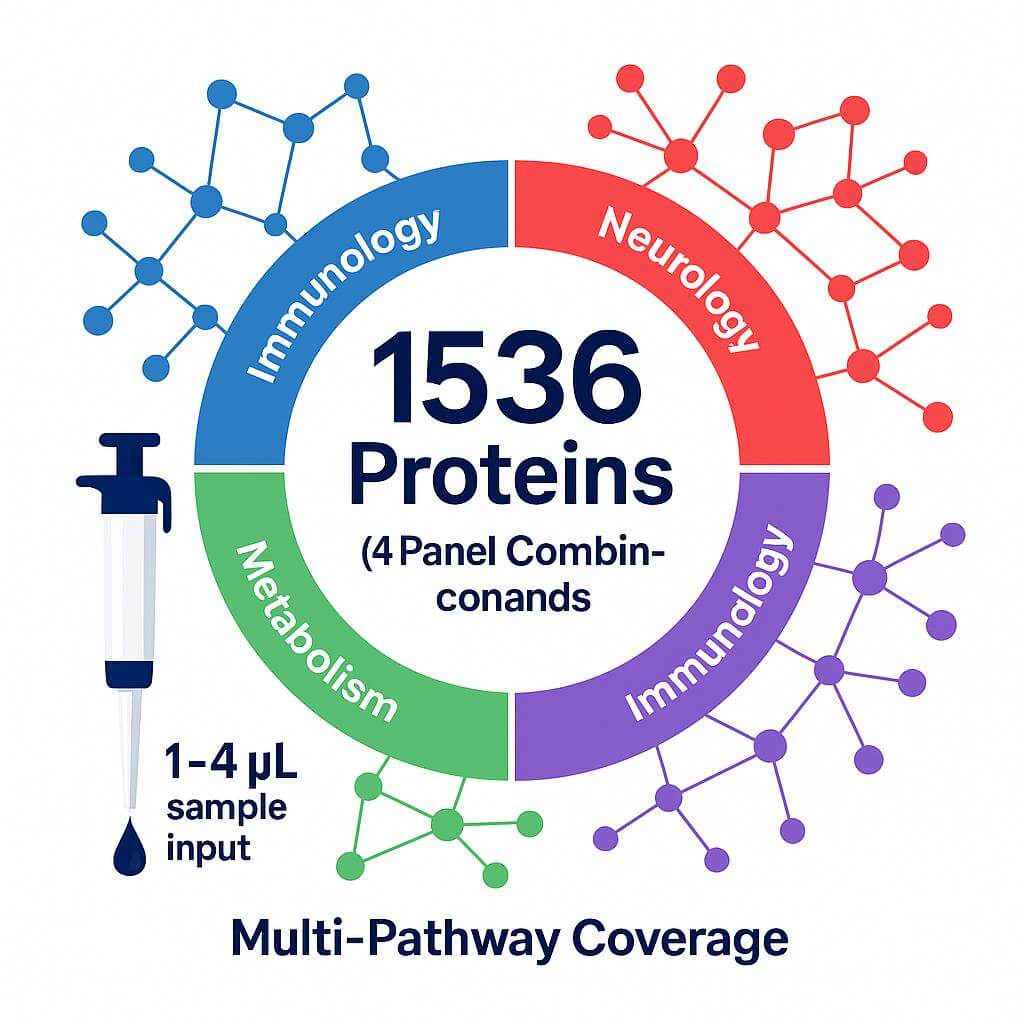
| Protein Targets | ~3,000 proteins | ~1,500 proteins |
| Sample Volume | Minimal (1-6 μL) | Minimal (1-6 μL) |
| Multiplexing Capacity | Higher | Moderate |
| Data Output Scale | Extensive (comprehensive proteome coverage) | Substantial (focused proteome coverage) |
Note: The difference in protein coverage represents more than just a numerical distinction. The expanded coverage in Explore 3072 encompasses broader biological pathways, potentially enabling discoveries across more disease areas and biological processes.
 Figure 1: Based on the Olink Explore 3072 data, this heatmap visualizes the distinct expression patterns of numerous proteins across an adult lifespan, revealing a strong association between advanced age and the upregulation of specific markers like CXCL17. (Gong, Q. et al., 2025)
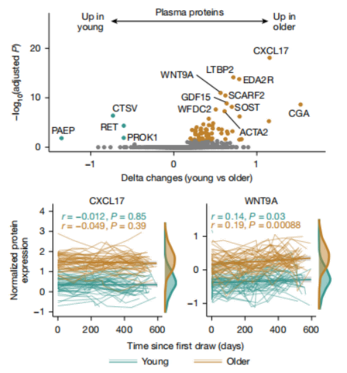 Figure 2: The Olink Explore 1536 data reveal a significant age-associated increase in specific plasma proteins like CXCL17 and WNT9A, which remain stable over time. (Gong, Q. et al., 2025)
Beyond Throughput: Technical Differences and Data Quality
While throughput numbers provide an initial selection criterion, the technical differences between these platforms significantly influence their application and the resulting data quality. Understanding these distinctions is essential for matching platform capabilities to research objectives.
Depth of Detection and Multiplexing Capabilities
The Olink Explore 3072 platform significantly expands protein coverage compared to the 1536 version, utilizing PEA technology for high-specificity detection, even for low-abundance proteins. This expanded panel is valuable for exploratory, hypothesis-free research, maintaining sensitivity across a wide dynamic range, as demonstrated in large-scale studies.
Assay Performance and Technical Specificity
Both platforms maintain the technical advantages of Olink's PEA technology, including:
- High specificity: Reduced cross-reactivity compared to traditional immunoassays
- Excellent sensitivity: Ability to detect low-abundance proteins in minimal sample volumes
- Precision: Low intra- and inter-assay coefficients of variation
The Olink Explore 1536 platform provides a focused protein panel that targets biologically relevant proteins across major signaling pathways. This focused approach is particularly beneficial when studying specific disease mechanisms or when prior knowledge supports a more targeted investigation.
Cost Considerations: Making Informed Decisions from a Budget Perspective
Budget allocation for proteomics studies requires careful consideration of both immediate costs and long-term value. The economic implications of platform selection extend beyond per-sample pricing to encompass overall study design and potential follow-up investigations.
Initial Investment and Operational Economics
Olink Explore 3072 Platform:
- Offers a higher multiplexing capacity, representing a higher initial investment.
- Provides significant economies of scale for very large studies (several thousand samples or more).
- Delivers superior value on a cost-per-protein-analyzed basis for massive studies.
- Ideal for comprehensive, discovery-phase proteomic profiling.
Olink Explore 1536 Platform:
- Presents a lower barrier to entry for large cohort studies.
- Provides substantial proteome coverage, offering an optimal balance between depth and budget.
- Particularly suitable for research with defined objectives focusing on specific biological pathways.
- A strong fit for pharmaceutical R&D teams conducting targeted biomarker studies across multiple sites or cohorts.
Data Value Versus Expenditure
When evaluating cost considerations, it's essential to recognize that comprehensive data quality often outweighs initial price differences. Both platforms minimize sample volume requirements (1-6 μL), which is particularly valuable when working with precious biobank samples or longitudinal collections where sample conservation is crucial.
The strategic value of generating robust, publication-quality data that withstands statistical scrutiny and regulatory requirements cannot be overstated. For CROs, this translates to client satisfaction and repeat business; for pharma R&D teams, it means confident decision-making in drug development pipelines.
Application Scenarios: Research Pathways from Exploration to Verification
Understanding the typical application scenarios for each platform helps contextualize the selection process based on research objectives rather than technical specifications alone.
Biomarker Discovery in Drug Development
For early discovery phase work in pharmaceutical R&D, where the goal is to identify novel therapeutic targets or biomarker signatures, the comprehensive coverage of the Explore 3072 platform offers distinct advantages. The ability to profile thousands of proteins without prior hypothesis enables unbiased discovery and can reveal unexpected associations with disease states or treatment responses.
Focused Verification
The Olink Explore 1536 platform offers a balance of broad coverage and practical efficiency when the research aim is targeted verification of known biomarkers or tracking particular biological pathways. It is particularly applicable in the following areas:
- Study Cohort Stratification: Categorizing participant subgroups according to distinct protein signatures.
- Pharmacodynamic Monitoring: Evaluating the engagement of therapeutic targets and the resulting biological responses to interventions.
- Assessment of Toxicity Biomarkers: Tracking signals related to safety across different treatment groups.
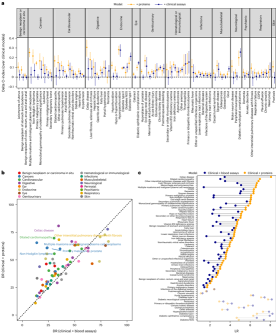 Figure 3: The analysis demonstrates that protein signatures derived from the Olink Explore 1536 platform significantly enhance disease prediction accuracy compared to standard clinical assays. (Carrasco-Zanini, J. et al., 2024)
Service Offerings and Portfolio Strategy
The platform selection decision often revolves around client needs and service diversification. Offering both platforms allows customers to cater to a broader range of client requirements—from comprehensive discovery projects to targeted verification studies. Our company has expanded our biomarker discovery capabilities by incorporating Olink platforms into the service portfolio, enabling us to address diverse client needs across multiple therapeutic areas including oncology, immuno-oncology, and infectious diseases. This strategic positioning allows customers to support researchers' efforts in translational research, patient-centric sampling, and biomarker analysis.
Conclusion: Planning the Experimental Path for Success
Selecting between Olink Explore 3072 and Explore 1536 represents a strategic decision that extends beyond technical specifications to encompass research objectives, operational capabilities, and long-term scientific goals.
Decision Framework
The following workflow can guide platform selection:
- Define primary research questions: Are you conducting hypothesis-generating exploration or targeted verification?
- Assess sample availability: Consider both quantity and sample volume constraints.
- Evaluate protein coverage needs: Determine whether comprehensive proteome coverage or focused pathway analysis aligns better with your goals.
- Analyze budget constraints: Consider both immediate costs and long-term value.
- Plan for data integration: Consider how proteomic data will integrate with other omics datasets (genomics, transcriptomics) for comprehensive biological insights.
Integrated Research Pathways
A strategic approach increasingly employed by leading research organizations involves sequential utilization of both platforms—using the Explore 3072 for initial discovery phases in smaller subsets of samples, followed by targeted validation of key findings using the Explore 1536 platform across larger cohorts. This two-stage approach optimizes both discovery power and practical efficiency.
Additionally, Olink provides bridging protocols to normalize data between different platforms, facilitating integrated analyses across studies. This capability is particularly valuable for long-term research programs that may evolve in scale and scope.
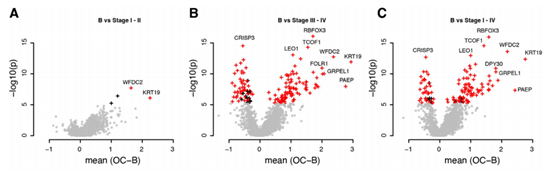 Figure 4: The combined analysis of data from Olink Explore 3072 and Explore 1536 reveals a substantial increase in the number of significantly dysregulated proteins when comparing benign controls to ovarian cancer. (Ivansson, E. et al., 2024)
FAQs
1. Can I combine data generated from both platforms in the same study?
Yes, Olink provides established bridging protocols to normalize data between different platforms. Studies have demonstrated protocols for bridging data between Explore 3072 and Explore HT platforms, and similar principles apply to data integration between Explore 3072 and 1536. This enables researchers to leverage both platforms in phased study designs.
2. How does the protein panel content differ between the two platforms?
While both platforms cover proteins associated with major biological pathways and disease areas, the Explore 3072 panel includes approximately twice as many protein targets. This expanded coverage includes additional proteins across various pathways, providing broader biological context. The specific protein lists are available from Olink and should be reviewed against your research interests.
3. Which platform is more suitable for studies with limited sample volumes?
Both platforms require minimal sample volumes (1-6 μL), making them suitable for studies with volume constraints. The choice between platforms should therefore be based on the required protein coverage rather than sample volume considerations.
4. How do data quality and technical reproducibility compare between the platforms?
Both platforms maintain the high standards of Olink's PEA technology, with excellent specificity, sensitivity, and reproducibility. The core technology is consistent across platforms, with the main difference being the degree of multiplexing.
5. Can custom content be added to either platform?
Olink offers flexible solutions through its product portfolio, including Olink Flex for customized panels of 5-30 proteins. For the Explore platforms, the content is largely fixed to maintain assay performance and quality control, but complementary targeted panels can be used alongside for additional protein coverage.
Related Reading
To better understand how Olink performs against other proteomic platforms, we recommend exploring the following related guides:
Olink High-Throughput Proteomics — An overview of how high-throughput proteomics is transforming biomedical research through large-scale initiatives.
Choosing the Right Olink Panel — A comprehensive guide to selecting the most appropriate Olink solution for drug development applications.
References
- Gong, Q., Sharma, M., Glass, M.C. et al. Multi-omic profiling reveals age-related immune dynamics in healthy adults. Nature (2025).
- Carrasco-Zanini, J., Pietzner, M., Davitte, J. et al. Proteomic signatures improve risk prediction for common and rare diseases. Nat Med 30, 2489–2498 (2024).
- Ivansson, E., Hedlund Lindberg, J., Stålberg, K. et al. Large-scale proteomics reveals precise biomarkers for detection of ovarian cancer in symptomatic women. Sci Rep 14, 17288 (2024).