

 Submit Your Request Now
Introduction
Protein count is not the only criterion for choosing a proteomics platform. Whether “about 1,000 proteins” is enough depends on whether your essential proteins, the core pathways that connect them, and your study endpoints are actually covered, not whether the panel’s headline number is close to 1,000.
This article lays out a practical, research-use-only coverage audit workflow that helps you:
- build a clean, standardized target list,
- review pathway-level representation across inflammation and cardiometabolic biology,
- identify missing proteins that would weaken endpoints or interpretation,
- decide whether Olink Reveal is sufficient for your question, or whether broader discovery (or a supplemental method for a few critical proteins) is more defensible.
The goal is not to compare spec sheets. The goal is to document a platform decision you can defend after you have checked coverage, gaps, and detectability in the matrix you will analyze.
If you want a short overview of how researchers typically approach Olink panel selection at a high level, see Creative Proteomics’ guide on how to choose the right Olink panel for your research. This article goes deeper on the specific problem that guide can’t solve for you: proving that your biology is actually covered.
Protein Count Is Not the Same as Biological Coverage
Why “About 1,000 Proteins” Is Not a Complete Study Requirement
Researchers describe requirements in ways that sound similar but imply different evaluation criteria:
- “We want to measure ~1,000 proteins.” This is a capacity preference.
- “We want inflammation, cardiovascular, and metabolism coverage.” This is a pathway scope statement.
- “We must include these key proteins.” This is an endpoint constraint.
- “We want unbiased biomarker discovery.” This is a breadth-and-statistics problem, not a target-count problem.
A useful coverage audit begins with the research question. If your primary endpoint depends on a small set of proteins, evaluate those first and treat the rest as context.
Essential, Supporting, and Exploratory Targets
Split your target list into tiers:
- Essential targets: missing these compromises endpoints or primary conclusions.
- Supporting targets: needed for mechanism, confounding control, or pathway direction.
- Exploratory targets: expand discovery without being required for the main conclusion.
This prevents “coverage inflation,” where hundreds of low-priority matches mask a small number of endpoint-critical gaps.
Pathway Coverage Matters More Than Isolated Protein Matches
Finding a few famous proteins does not mean a pathway is represented in a way that supports interpretation.
For example, “inflammation” spans multiple levels: ligands and receptors, intracellular signaling, feedback regulators, and downstream readouts. A panel that captures only downstream acute-phase signals can detect differences but still be weak for explaining why they happen.
Key Takeaway: “Enough proteins” is about observing the right biology at enough pathway depth, not reaching a round number.
Build a Clean Target List Before Comparing Platforms
Standardize Gene Symbols and Protein Identifiers
Before you compare platforms, standardize each target using identifiers that map cleanly:
- approved gene symbol,
- UniProt accession,
- full protein name,
- common aliases.
This sounds clerical, but it is where many coverage checks fail.
Resolve Aliases, Legacy Names, and Duplicate Entries
The same protein can appear multiple times because different collaborators used different names. Without cleanup, your submitted list can overestimate how many unique targets you actually have.
Common duplication patterns include legacy gene names, shorthand immune nomenclature, and slightly different spellings. The audit should de-duplicate and keep a mapping history so reviewers can see what changed.
Treat Isoforms and Protein Families Carefully
Coverage checks often break down around isoforms and families:
- A gene symbol does not guarantee isoform-level discrimination.
- Assays may target shared regions across isoforms or family members.
- Keyword matching is not enough to confirm specificity.
If isoform specificity matters to your hypothesis, treat the match as “requires manual review” rather than automatically calling it covered.
For background on how NPX is processed and why assay-level interpretation matters, see Understanding Olink’s data analysis process.
Add Biological Priority to Every Target
A target list should carry just enough metadata to make coverage auditing possible:
| Field | Purpose |
| Gene symbol | Standard identification |
| UniProt ID | Protein-level mapping |
| Biological pathway | Coverage assessment |
| Priority | Essential / supporting / exploratory |
| Sample matrix | Detectability assessment |
| Study role | Endpoint / covariate / discovery target |
How to Audit Olink Reveal Coverage
Map Targets to Biological Pathways
For cardiometabolic and inflammation research, make pathway mapping explicit. Even if your downstream analysis is data-driven, pathway mapping is how you audit interpretability.
A practical audit can review coverage across:
- inflammatory signalling,
- cytokines and chemokines,
- cardiovascular injury and remodelling,
- endothelial biology,
- lipid and glucose metabolism,
- adipose biology,
- immune–metabolic interactions.
Do not overfit to a single pathway database. The point is to ensure essential biology is represented across multiple layers.
Identify Critical Missing Proteins
After mapping, classify gaps by endpoint relevance:
- endpoint-critical missing (threatens the main conclusion),
- missing but substitutable (document why a related marker can substitute),
- missing exploratory (acceptable loss),
- requires another method (essential and not covered).
Check Coverage at the Pathway Level
Avoid treating coverage as a single ratio. Also ask:
- Are upstream and downstream layers represented, or only downstream readouts?
- Are key receptors/ligands/regulators present, or are you missing the nodes that anchor interpretation?
- Do you have enough diversity to interpret group differences, not just detect that “something changed”?
Review Matrix-Relevant Detectability
Panel presence does not guarantee usable data in your matrix and cohort.
Detectability can vary with abundance, plasma vs serum handling, cohort biology, and pre-analytics. Peer-reviewed evaluations of PEA-NGS datasets show that matrix-dependent differences exist for subsets of proteins even when overall technical reproducibility is high (Wik et al., 2021). A paired serum vs EDTA plasma evaluation also reported that a substantial subset of proteins were not directly comparable between matrices due to variability and matrix effects (Smith et al., 2022).
In practice, your audit should include a simple “data reality check” that mirrors how Olink datasets are typically reviewed: look at per-protein missingness, values flagged below detection/quantification limits, and QC pass patterns in the matrix you plan to analyze. A practical overview of these steps is summarized in How to interpret results from Olink’s serum proteomics panels (use as workflow guidance; not as external evidence).
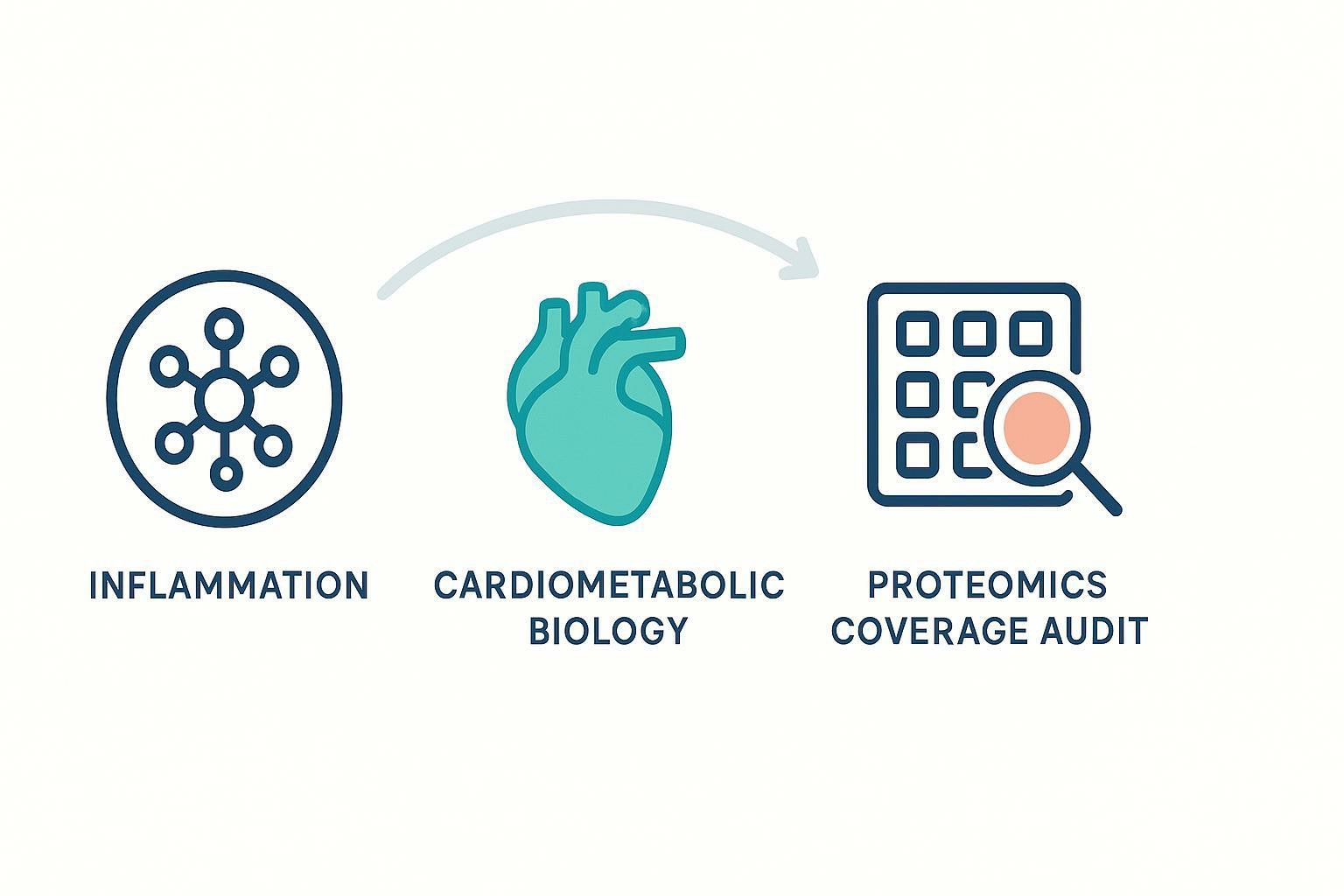 Figure 1. Workflow for evaluating biological coverage before selecting an Olink platform.
When Olink Reveal May Be Sufficient
The Critical Biology Is Already Covered
Reveal may be sufficient when:
- most essential targets are covered,
- your key pathways have representation across multiple layers,
- missing targets are not primary endpoints,
- the research question is well-defined.
The Study Needs Controlled Discovery Rather Than Maximum Breadth
Reveal can be a defensible choice when you want discovery with guardrails:
- a clear disease context or pathway direction exists,
- you want to expand candidates without maximum breadth,
- you want to control multiple testing burden and interpretation noise,
- you have an independent validation plan.
Large Cohort Size Makes Analytical Efficiency Important
Large cohorts amplify the practical impact of:
- missingness patterns and their effect on power,
- batch structure,
- multiplicity penalties,
- interpretation workload.
If you are planning a large cohort, it helps to decide early how you will monitor QC consistency across runs and how you will handle missingness for endpoint-critical proteins. A practical planning checklist is outlined in Designing large-scale Olink proteomics cohorts: power and QC.
When Broader Discovery Is More Defensible
The Biological Mechanism Is Still Uncertain
Broader coverage is often more defensible when:
- the mechanism is unclear,
- multiple organs or pathways may contribute,
- the goal is to discover new protein signatures,
- known proteins have not explained the phenotype.
Critical Pathways Are Only Partially Covered
If a core pathway is missing multiple key nodes, a high overall coverage percentage does not rescue interpretability. The audit should reveal whether you are observing pathway drivers (receptors, ligands, regulators) or only consequences.
The Dataset Is Intended for Future Reuse
Broader discovery may be justified when the dataset is expected to support future questions (longitudinal cohorts, biobanks, multi-disease programs, or planned multi-omics reuse).
More Proteins Also Create More Analytical Burden
More breadth increases:
- multiple testing burden and false discoveries,
- the complexity of biological interpretation,
- validation workload,
- the need for stricter analysis governance.
If you choose broader discovery, document why the added hypothesis space is worth the added burden.
Assay Presence Does Not Guarantee Useful Data
Coverage and Detectability Are Different Questions
A coverage audit should separate four statements:
- the assay is included,
- the protein is detectable in your matrix,
- the protein passes QC and is analyzable,
- the protein is informative for your endpoint.
Stopping at (1) is a common failure mode.
Low-Abundance Proteins Need Special Attention
Low-abundance proteins are more likely to show high missingness or left-censoring, values near detection/quantification limits, and group-imbalanced missingness.
In proximity extension assay datasets, missingness can be left-censored (below LOD) as well as technical. A benchmark in PEA-based targeted proteomics emphasizes that imputation performance varies strongly by protein, and imputation can be detrimental for some univariate analyses (Lundberg et al., 2021). More broadly, an independent technical performance evaluation of Olink PEA in longitudinal blood-based biomarker work applied missingness-based filtering (for example, excluding proteins with high missing value rates) as part of fit-for-purpose QC (Technical performance evaluation, 2022).
Pilot Testing May Be Needed
Consider a pilot when:
- multiple essential proteins are expected to be low abundance,
- sample handling histories are inconsistent,
- samples are irreplaceable,
- endpoints depend on a small set of proteins.
A Reveal-specific analytical performance evaluation using external standards and spike-ins is an example of the type of verification that can be informative when you are relying heavily on low-level signals (brief evaluation of Olink Reveal, 2025).
What a Coverage Audit Should Deliver
Standardized Protein Mapping Table
At minimum, the audit should output a mapping table with:
- submitted target (original),
- standardized name,
- gene symbol,
- UniProt ID,
- panel match,
- match confidence,
- biological pathway,
- priority.
If you want the mapping table to be reviewable (and not just an export), add two practical fields:
- match rationale (for example: exact UniProt match, curated synonym match, or manual confirmation),
- action if missing/ambiguous (drop, substitute within pathway, or measure by an orthogonal method).
Those two columns make it obvious which “covered” calls are solid and which ones are still assumptions.
Covered, Missing, Ambiguous, and Redundant Targets
Classify targets as:
- Covered
- Missing
- Ambiguous
- Duplicate
- Isoform-dependent
- Requires manual review
Pathway-Level Coverage Summary
Summarize, by pathway:
- target count,
- covered proportion,
- endpoint-critical gaps,
- plausible substitutes,
- unacceptable missing nodes.
Platform Recommendation with Explicit Trade-Offs
A recommendation should state:
- why it fits the endpoint,
- what is not covered,
- whether gaps affect primary conclusions,
- whether supplementary assays are required,
- what broader discovery would add,
- whether that added coverage is worth the extra burden.
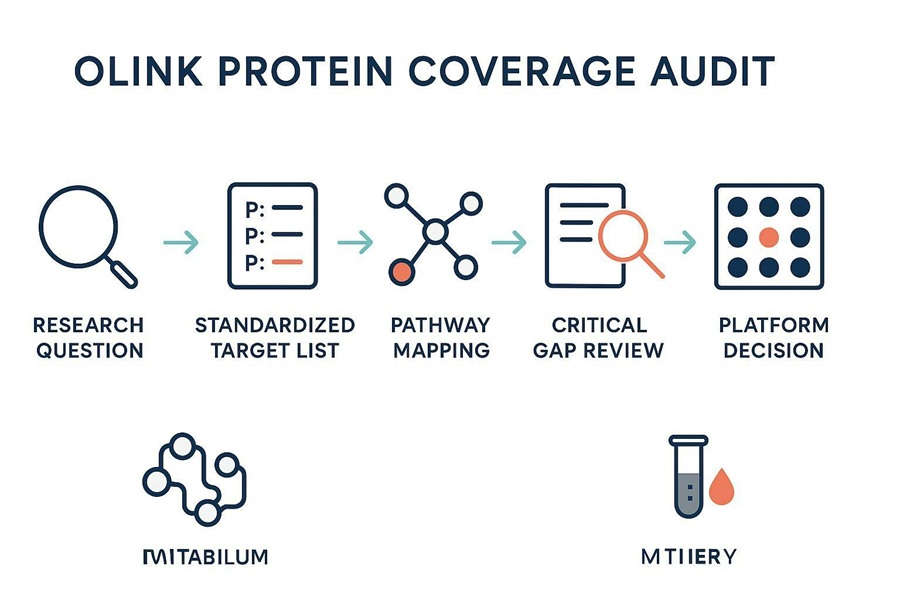 Figure 2. Example structure of a pathway-level protein coverage audit.
A Practical Platform Decision Framework
| Study Situation | Likely Starting Direction | Main Reason |
| Clear pathways and strong target coverage | Reveal may be sufficient | Focused biological coverage |
| Several essential proteins are missing | Broader platform or supplementary method | Critical gaps affect the endpoint |
| Mechanism is poorly defined | Broader discovery | Wider hypothesis generation |
| Large cohort with controlled scope | Reveal may offer an efficient balance | Limits unnecessary analytical breadth |
| Biobank intended for future studies | Broader discovery may be justified | Greater future reuse |
| Key proteins may be difficult to detect | Pilot or complementary testing | Panel presence does not guarantee useful data |
Checklist:
- Which proteins are essential?
- Which pathways must be represented?
- Which missing targets would change the study conclusion?
- Is broad discovery truly required?
- What matrix will be analyzed?
- What missingness level is acceptable?
- Is the dataset intended for future reuse?
- What validation strategy is planned?
Frequently Asked Questions
Are 1,000 proteins enough for biomarker discovery?
Sometimes. If discovery is constrained by a defined biology and validated endpoints, ~1,000 proteins can be enough when essential pathways are represented. If the mechanism is unclear and the goal is broad hypothesis generation, wider coverage is often easier to defend.
Is Olink Reveal suitable for inflammation and cardiometabolic research?
It can be, but suitability should be decided by mapping essential targets and pathways, then checking detectability risk in the chosen matrix. The label “inflammation” is not specific enough to answer this on its own.
Should a target list use gene symbols or UniProt IDs?
Use both. Gene symbols help with communication and pathway mapping; UniProt IDs reduce ambiguity at the protein level.
What happens when the same protein has multiple names?
Your list inflates and coverage estimates become unreliable. Standardize and de-duplicate before you calculate coverage.
Can Olink assays distinguish protein isoforms?
Not always. If isoform specificity is essential, treat matches as ambiguous until assay-level specificity is reviewed.
What if several essential proteins are not covered?
Treat it as a decision driver. Either choose broader discovery or plan supplementary assays for essential gaps, and document how the gaps would affect endpoint interpretation.
Does panel inclusion guarantee detection in plasma or serum?
No. Inclusion means an assay exists. Detectability depends on matrix, abundance, cohort biology, and pre-analytics.
When is Explore HT more appropriate than Reveal?
When the mechanism is uncertain, when multiple essential pathways are only partially represented by Reveal, or when future reuse is a primary goal.
Does a larger cohort always require a smaller panel?
No. Large cohorts increase multiplicity and missingness consequences, so efficiency matters, but endpoint-critical gaps still dominate the decision.
Can Olink data be combined with phenotype or questionnaire data?
Yes. Proteomics is usually more interpretable when paired with phenotypes, covariates, and longitudinal context.
What metadata should accompany the protein matrix?
Matrix type, collection/processing details (as available), batch/plate identifiers, group labels, and QC flags are the minimum needed to interpret missingness and batch structure.
When should a pilot study be performed?
When essential targets are likely low abundance, sample handling histories differ, or the dataset is irreplaceable.
Conclusion and CTA
Protein count alone cannot determine platform fit. Coverage must be reviewed at the protein, pathway, matrix, and study-endpoint levels. Missing one essential protein can matter more than covering hundreds of exploratory proteins.
If you want a research-use-only coverage review, submit a standardized target list (gene symbol + UniProt ID), biological priorities (essential/supporting/exploratory), sample matrix, cohort design, and required deliverables (mapping table, pathway summary, gap classification, and a documented platform recommendation).
For Research Use Only. Not for use in diagnostic procedures.
Author
CAIMEI LI
Senior Scientist at Creative Proteomics
LinkedIn profile